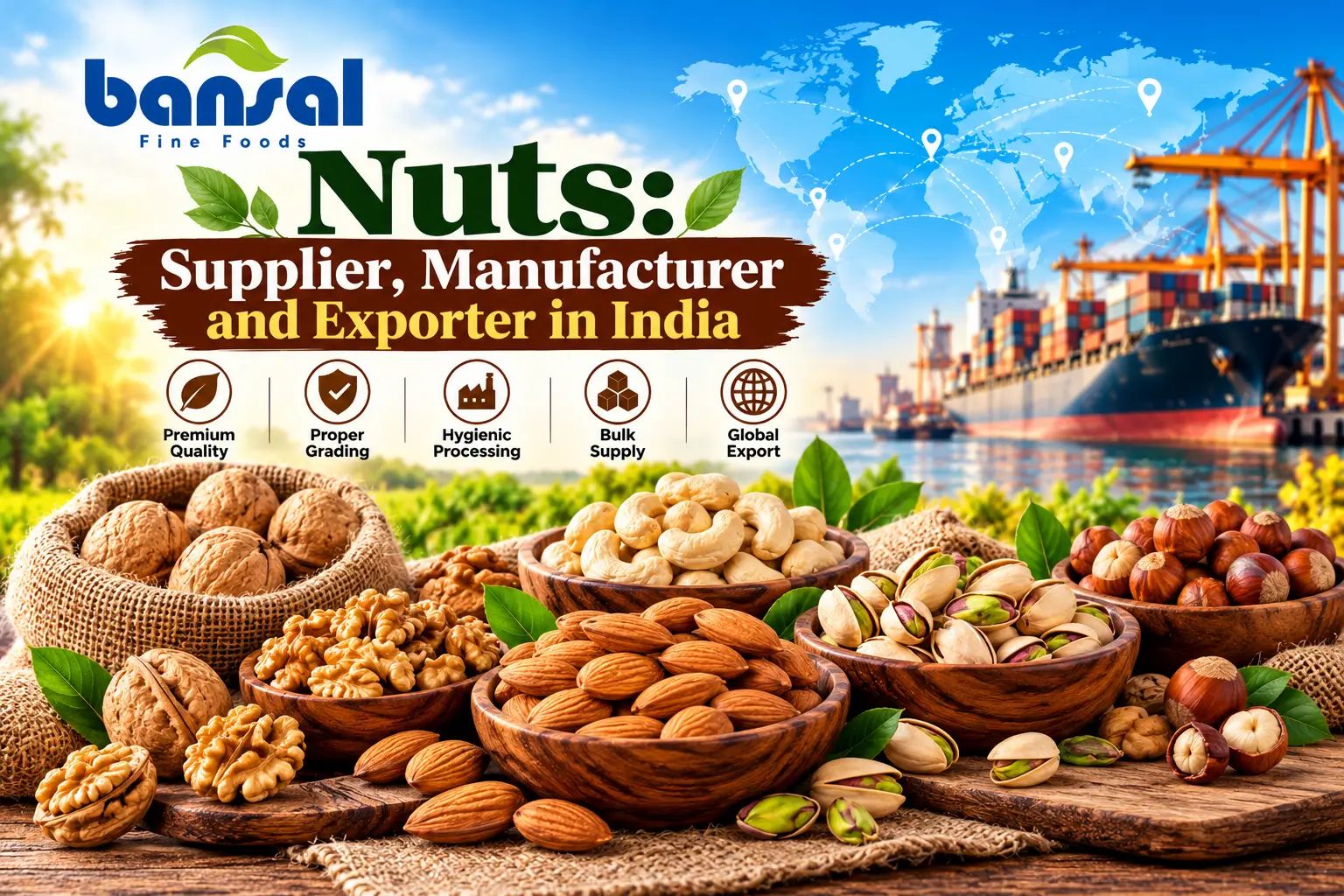
Nuts are an important part of the global food industry. They are widely consumed as snacks, used in traditional recipes, added to bakery products, and included in several food preparations. Almonds, cashews, pistachios, walnuts, and other varieties are popular among consumers because of their taste, nutritional value, and versatility.
With increasing demand for quality dry fruits and nuts, businesses are looking for dependable suppliers and manufacturers who can provide consistent products, proper grading, hygienic packaging, and reliable supply. From supermarkets and retail stores to food processing companies, hotels, restaurants, and international distributors, different industries require nuts in various quantities and specifications.
Choosing the right nuts supplier is therefore an important decision for businesses that want to maintain product quality and meet customer expectations. Similarly, working with an experienced nuts manufacturer can help businesses source products that meet their requirements for grading, processing, packaging, and distribution.
Bansal Fine Foods understands the importance of quality in the food supply industry. With a focus on food products and customer requirements, the brand aims to serve businesses looking for quality nuts and dependable sourcing solutions for domestic and international markets.
Understanding Different Types of Nuts Available in the Market
The nuts market includes several varieties that differ in taste, texture, size, appearance, and culinary applications. Each variety has its own demand among consumers and commercial buyers.
Understanding these varieties helps wholesalers, retailers, distributors, and food manufacturers choose suitable products for their businesses.
1. Almonds
Almonds are among the most popular nuts consumed worldwide. They are used in everyday snacking, confectionery, bakery products, desserts, and traditional Indian sweets.
They are available in different grades and sizes depending on their origin and processing methods.
Common commercial applications include:
-
Retail dry fruit packaging.
-
Bakery and confectionery production.
-
Almond flour and almond-based products.
-
Sweets, desserts, and snack preparations.
-
Hotels, restaurants, and catering businesses.
2. Cashew Nuts
Cashews are widely used in Indian cooking, snacks, sweets, and international cuisines. Their creamy texture and mild flavour make them suitable for both savoury and sweet food preparations.
Cashews are available in different grades based on kernel size, shape, and appearance.
They are commonly used in:
-
Traditional Indian sweets and desserts.
-
Gravies and restaurant preparations.
-
Chocolate and confectionery products.
-
Roasted and flavoured snack products.
-
Commercial food manufacturing.
3. Pistachios
Pistachios are valued for their distinctive taste, green kernels, and crunchy texture. They are commonly used in desserts, bakery products, ice creams, and premium snack assortments.
They are also popular during festive occasions and are frequently included in gift packs and dry fruit collections.
4. Walnuts
Walnuts are recognised for their unique flavour and soft, slightly crunchy texture. They are used in bakery products, breakfast preparations, desserts, and snack mixes.
Walnut kernels are also used in several food processing applications where specific kernel sizes and quality grades are required.
5. Other Nuts and Nut Products
Apart from almonds, cashews, pistachios, and walnuts, the market includes several other nut products used in different food applications.
These may include hazelnuts, macadamia nuts, and mixed nut combinations.
Their demand comes from premium snack manufacturers, confectionery brands, bakeries, food retailers, and businesses involved in packaged food distribution.
Why Is the Demand for Quality Nuts Increasing?
The demand for nuts has increased across different consumer and commercial segments. Changing food preferences, growing awareness of nutritional choices, and the expansion of packaged food products have contributed to the popularity of nuts.
Some important factors driving this demand include:
1. Increasing Preference for Convenient Snacks
Consumers increasingly look for convenient food options that can be included in their daily routines. Nuts are easy to store, carry, and consume, making them a popular snack choice.
Retailers and packaged food companies are responding to this demand by offering different nut varieties and mixed nut products.
2. Growing Bakery and Confectionery Industry
Nuts are important ingredients in several bakery and confectionery products.
Almonds, cashews, pistachios, and walnuts are used in cakes, cookies, chocolates, pastries, traditional sweets, and dessert toppings.
The growth of these industries creates opportunities for businesses involved in nut sourcing and distribution.
3. Expansion of Retail and E-commerce
Supermarkets, grocery stores, online marketplaces, and specialised dry fruit retailers offer different varieties of nuts in multiple packaging sizes.
This creates demand for suppliers who can provide suitable products for retail distribution and private-label packaging.
4. Demand from Food Processing Companies
Food manufacturers require nuts in different forms, including whole kernels, chopped nuts, sliced almonds, and nut pieces.
Consistent quality and suitable product specifications are important for maintaining the quality of finished food products.
5. Growth in International Food Trade
Nuts are traded across international markets to meet consumer and industrial requirements.
Importers, wholesalers, distributors, and food manufacturers look for suppliers who understand product specifications, export documentation, packaging, and logistics.
Importance of Choosing a Reliable Nuts Supplier
Selecting the right supplier is essential for businesses that purchase nuts regularly. Product quality, freshness, storage conditions, grading, and packaging can directly influence customer satisfaction.
A professional nuts supplier should understand the requirements of different buyers and provide clear information about the products being offered.
Here are some important factors to consider when choosing a supplier.
1. Product Quality and Freshness
Quality should be a major consideration when purchasing nuts. Buyers should check the appearance, texture, smell, and condition of the products.
Nuts should be free from visible contamination, excessive moisture, and signs of spoilage. Proper quality checks help maintain product standards throughout the supply chain.
2. Proper Grading and Sorting
Different businesses require different nut grades.
For example, a premium retail brand may prefer whole, uniform kernels, while a food processing company may require chopped or broken nuts for manufacturing purposes.
Proper grading and sorting help buyers select products according to their applications.
3. Hygienic Packaging
Packaging plays an important role in maintaining nut quality.
Suitable packaging helps protect nuts from moisture, dust, contamination, and external environmental conditions.
Depending on the product and buyer requirements, suppliers may offer different packaging formats, including retail pouches, jars, bulk bags, and customised packaging.
4. Reliable Bulk Supply
Businesses such as supermarkets, wholesalers, food manufacturers, and distributors often require large quantities of nuts.
A reliable supplier should communicate product availability, order quantities, pricing, and delivery schedules clearly.
Consistent supply arrangements help businesses manage their inventory and fulfil customer orders.
5. Transparent Pricing
Nut prices may vary depending on variety, origin, grade, size, quality, seasonal availability, and market conditions.
Buyers should compare product specifications along with pricing rather than making purchasing decisions based only on the lowest quoted price.
6. Storage and Handling Practices
Nuts contain natural oils and can be affected by unsuitable storage conditions.
Exposure to heat, moisture, oxygen, and sunlight can reduce their quality and shelf life.
Appropriate storage and handling practices are important for maintaining product freshness during distribution.
What Does a Nuts Manufacturer Do?
A nuts manufacturer plays an important role in preparing nuts for commercial distribution and different food applications.
Depending on the business model, manufacturing and processing operations may include cleaning, sorting, grading, roasting, cutting, packing, and labelling.
The overall process can involve the following stages.
1. Raw Material Procurement
The process begins with sourcing nuts from suitable agricultural producers, processors, or established suppliers.
The quality of raw materials is important because it affects the appearance, taste, and consistency of the finished products.
2. Cleaning and Inspection
After procurement, nuts are inspected and cleaned to remove unwanted materials, dust, and other impurities.
Initial inspection helps identify damaged or unsuitable products before further processing.
3. Grading and Sorting
Nuts are separated according to size, shape, colour, and quality.
Depending on the variety, grading may also involve separating whole kernels from broken or damaged pieces.
This process allows manufacturers to prepare products for different commercial applications.
4. Processing and Roasting
Some nuts are supplied in their natural form, while others undergo additional processing.
Depending on the product, processing may include roasting, slicing, chopping, or other preparation methods.
Roasted and flavoured nuts are particularly popular in the packaged snack industry.
5. Quality Testing
Quality checks help ensure that finished products meet the required specifications.
Important checks may include moisture levels, visual quality, foreign matter, product condition, and packaging integrity.
Food safety procedures and testing requirements should also be followed according to applicable regulations.
6. Packaging and Labelling
The final stage involves packing the nuts into suitable containers or bags.
Labels may include product names, net weight, ingredients, nutritional information, batch details, storage instructions, and other legally required information.
Proper packaging supports product protection, storage, transportation, and retail presentation.
How to Select the Right Nuts Manufacturer for Your Business
Finding the right manufacturer is important for businesses that need a regular supply of quality nuts.
Whether you operate a retail store, food processing company, supermarket, bakery, or wholesale distribution business, selecting the right manufacturing partner can support your procurement requirements.
Consider the following factors before finalising a supplier or manufacturer.
Check Product Range: Look for a business that can supply the nut varieties required by your target customers.
Understand Quality Standards: Ask about grading methods, inspection procedures, product specifications, and food safety practices.
Review Processing Capabilities: Check whether the manufacturer can provide whole, sliced, chopped, roasted, or other required product formats.
Compare Packaging Options: Discuss retail packaging, bulk packaging, and private-label requirements.
Evaluate Supply Capacity: Understand whether the manufacturer or supplier can meet your expected order quantities and delivery schedules.
Discuss Commercial Terms: Clarify pricing, minimum order quantities, payment terms, delivery arrangements, and applicable taxes before placing an order.
These factors help businesses make informed purchasing decisions and build long-term supplier relationships.
Role of Nuts Suppliers in Domestic and International Markets
The nuts supply industry connects producers, processors, manufacturers, wholesalers, retailers, and consumers.
A professional supplier helps manage the movement of products between different stages of the supply chain.
Domestic suppliers generally serve retail stores, supermarkets, hotels, restaurants, wholesalers, and food processing businesses.
International suppliers and exporters also need to understand destination-specific requirements, shipping documentation, packaging regulations, and import standards.
Some important responsibilities include:
-
Sourcing suitable nuts from reliable channels.
-
Maintaining product quality during storage.
-
Coordinating bulk orders and product availability.
-
Providing appropriate packaging options.
-
Supporting domestic distribution requirements.
-
Coordinating export shipments and required documentation.
-
Maintaining clear communication with buyers.
For international buyers, it is important to work with suppliers who understand the commercial and regulatory requirements of their destination markets.
Why Choose Bansal Fine Foods for Nuts?
Choosing a dependable food products partner is important for businesses that want to maintain consistent quality and meet customer expectations.
Bansal Fine Foods focuses on serving the food products market with an understanding of different buyer requirements and product categories.
For businesses searching for a reliable nuts supplier, the right sourcing partner should offer clear product information, suitable quality specifications, appropriate packaging, and dependable commercial communication.
Bansal Fine Foods aims to serve buyers looking for quality food products for domestic and international markets.
The brand recognises that different customers have different requirements. Retailers may need consumer-friendly packaging, wholesalers may require bulk quantities, and food manufacturers may need specific nut grades and processing formats.
Important considerations include:
-
Different nut varieties for commercial requirements.
-
Product quality and grading specifications.
-
Suitable packaging for retail and bulk buyers.
-
Product sourcing and availability.
-
Requirements of wholesalers and distributors.
-
Domestic and international business enquiries.
Businesses looking for a nuts manufacturer or sourcing partner can connect with Bansal Fine Foods to discuss product availability, specifications, packaging requirements, and bulk purchasing enquiries.
Buyers should confirm the available product range and processing capabilities directly with the company before placing an order.
Growing Business Opportunities in the Nuts Industry
The nuts industry offers opportunities across retail, food processing, hospitality, and international trade.
As consumers look for different snack options and food manufacturers introduce new products, demand for various nut ingredients continues to create business opportunities.
Some important market segments include:
1. Packaged Dry Fruit and Nut Brands
Retail brands offer almonds, cashews, pistachios, walnuts, and mixed nuts in different consumer packaging sizes.
This segment requires attractive packaging, consistent quality, and suitable product sourcing.
2. Bakery and Confectionery Businesses
Bakeries and confectionery manufacturers use nuts as ingredients in cakes, biscuits, chocolates, sweets, and desserts.
They often require specific grades and processed nut formats.
3. Hotels and Restaurant Chains
Hotels, restaurants, and catering businesses use nuts in desserts, gravies, salads, snacks, and traditional food preparations.
These businesses generally look for dependable suppliers who can meet their recurring purchasing needs.
4. Wholesale and Distribution Businesses
Wholesalers and distributors purchase nuts in bulk and supply them to retailers, supermarkets, and other commercial customers.
Product availability, pricing, packaging, and supply consistency are important factors in this segment.
5. International Nut Trade
International buyers source nuts through established supply networks to serve local retail and food manufacturing industries.
Suppliers that understand export requirements and buyer specifications can participate in these commercial opportunities.
Frequently Asked Questions (FAQs)
1. What products does a nuts supplier generally offer?
A nuts supplier may offer almonds, cashews, pistachios, walnuts, hazelnuts, macadamia nuts, and mixed nut products. Availability depends on the supplier’s product range.
2. What is the difference between a nuts manufacturer and a nuts supplier?
A nuts manufacturer generally handles processing and preparation activities such as cleaning, grading, roasting, and packaging. A nuts supplier focuses on sourcing and distributing products to retailers, wholesalers, and commercial buyers. Some businesses perform both roles.
3. How can I identify a reliable nuts supplier?
Check product quality, freshness, grading, packaging, storage practices, pricing, order quantities, and delivery arrangements before selecting a supplier.
4. Which nuts are commonly used in food manufacturing?
Almonds, cashews, pistachios, walnuts, and hazelnuts are commonly used in bakery products, chocolates, confectionery, desserts, and packaged snacks.
5. What packaging options are available for nuts?
Nuts may be available in pouches, jars, vacuum-sealed packs, retail bags, and bulk packaging. The appropriate format depends on the product and buyer requirements.
6. Can businesses purchase nuts in bulk?
Yes. Wholesalers, retailers, supermarkets, restaurants, and food manufacturers commonly purchase nuts in bulk to meet their business requirements.
7. Why is grading important in the nuts industry?
Grading helps separate nuts based on size, appearance, shape, and quality. It allows buyers to select suitable products for retail sales, food processing, and other applications.
8. How should nuts be stored to maintain freshness?
Nuts should generally be stored in clean, dry, cool conditions and protected from direct sunlight, moisture, and excessive heat. Appropriate packaging and storage practices help maintain quality.
9. How can I enquire about bulk nuts supply from Bansal Fine Foods?
You can contact Bansal Fine Foods directly to enquire about available nut varieties, product specifications, packaging options, and bulk purchasing requirements.
Conclusion
Nuts are an important part of the food industry, serving households, retail businesses, restaurants, bakeries, confectionery manufacturers, and food processing companies. Their wide range of varieties and applications creates demand for quality products and dependable supply arrangements.
Choosing the right nuts supplier or nuts manufacturer is essential for maintaining product quality, managing bulk procurement, and meeting customer expectations.
Bansal Fine Foods aims to serve businesses looking for quality food products and dependable sourcing solutions. Whether you are a wholesaler, retailer, distributor, or food manufacturer, selecting the right supplier can support your business requirements and long-term growth.
If you are looking for a reliable nuts sourcing partner, connect with Bansal Fine Foods to discuss product availability, quality specifications, packaging, and bulk order requirements.