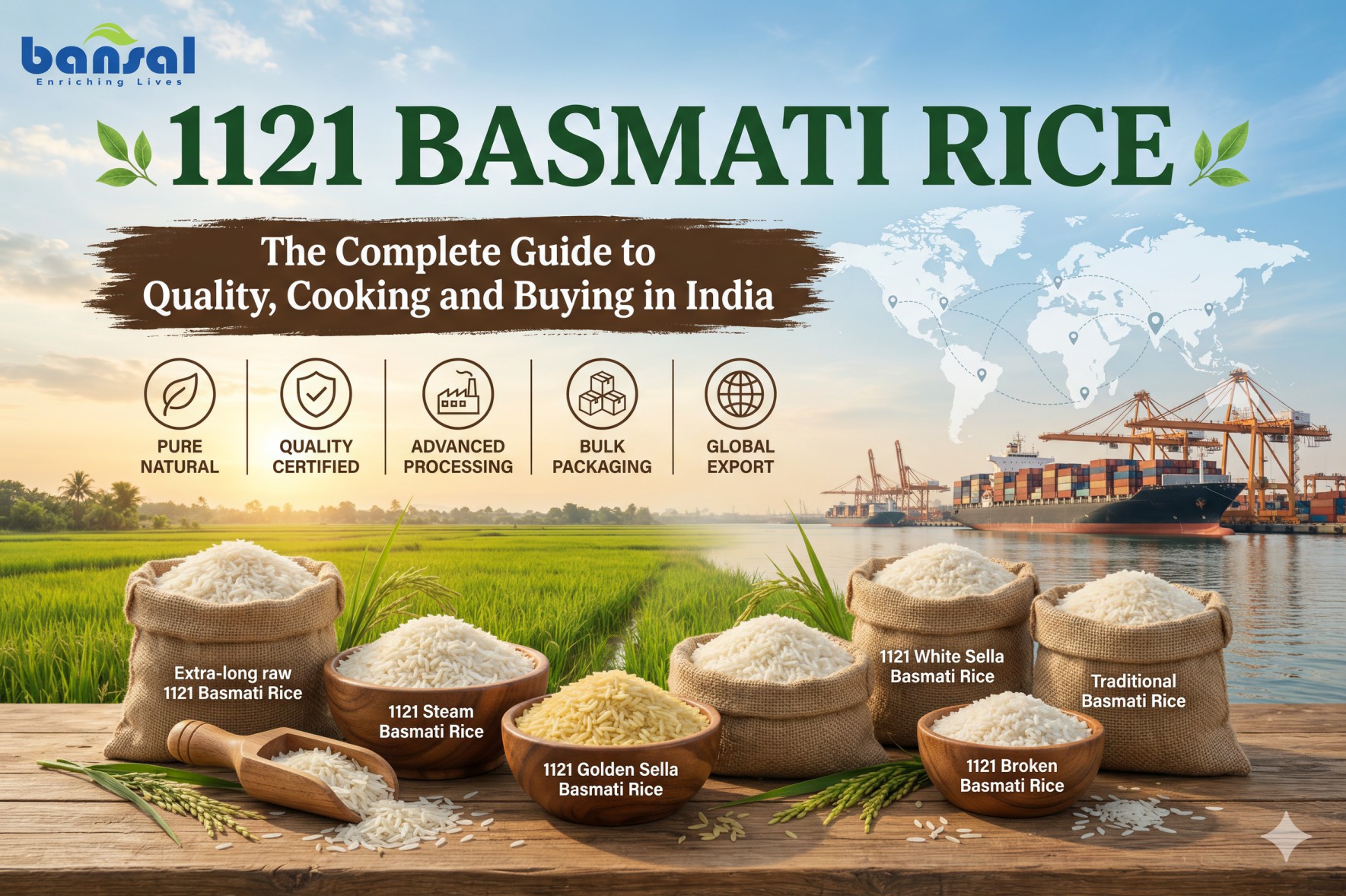
Walk into any wedding feast, restaurant kitchen or festive family lunch in India, and there is a good chance that the fragrant, long-grained rice on the plate is 1121 basmati rice. Over the last two decades it has become the most widely traded basmati variety in the country, loved by home cooks, caterers and exporters alike. At Bansal Fine Foods, a Karnal-based Export Trading House with a heritage that goes back to 1940, we have spent generations handling this grain, and this guide shares what that experience has taught us. Whether you are a household buyer, a restaurant owner or a distributor, the sections below explain what makes this variety special, how to judge its quality, how to cook it properly and how to buy it with confidence.
What Is 1121 Basmati Rice and Why Has It Become So Popular?
1121 basmati rice is a premium long-grain aromatic variety developed by the Indian Agricultural Research Institute, popularly known as Pusa, and released in the early 2000s. It was created to offer a grain that is longer, more slender and more elastic than traditional basmati types, while still keeping the signature fragrance that Indian families associate with celebrations.
The popularity of this variety is not accidental. A single glance at a cooked bowl explains the appeal: every grain stretches to nearly double its raw length, stays separate and carries a light, nutty aroma. For restaurants serving biryani or pulao, that visual impact is worth a great deal. For households, it means a pot of rice that looks and smells special even on an ordinary weekday. This combination of beauty, aroma and dependable performance is why the variety has earned such a loyal following across India and abroad.
Origin, Growing Regions and the Importance of Terroir
Basmati has a geographical identity. It is grown in the foothills of the Himalayas and the fertile Indo-Gangetic plains, covering parts of Punjab, Haryana, Delhi, Uttarakhand, Himachal Pradesh, Jammu and western Uttar Pradesh. The combination of cool nights, mineral-rich alluvial soil and carefully managed irrigation helps the grain develop its length and its aroma. Haryana, where Bansal Fine Foods is based, sits right in the heart of this belt, and Karnal has long been recognised as a major hub for rice milling and trading.
Our experience in this region has shown us that the quality of paddy is the foundation of everything that follows. A well-grown crop, harvested at the right moisture level and dried carefully, gives a far better finished grain than a rushed one. That is why sourcing from trusted farming communities, season after season, matters so much.
Key Characteristics That Set 1121 Basmati Rice Apart
Buyers often ask what exactly separates this variety from other long-grain rice. The answer lies in a handful of physical and sensory traits that work together. Here are the qualities that matter most:
- Exceptional grain length: The raw grain is among the longest in the basmati family, usually measuring well above eight millimetres after milling. This length is the reason the cooked rice looks so elegant, and it is also what premium buyers look for first when they inspect a sample.
- Remarkable elongation: When cooked correctly, the grain extends lengthwise to almost twice its raw size without breaking or turning sticky. This elongation gives biryani and pulao their majestic look and allows each portion to appear generous on the plate.
- Natural aroma: The rice carries a gentle, nutty fragrance that deepens when the grain is aged properly. Aroma is influenced by the variety, the growing region and the ageing process, which is why well-matured stock always smells richer than freshly harvested rice.
- Dry, fluffy texture: Because the starch behaves in a particular way during cooking, the grains stay separate and light. This makes the rice ideal for dishes where texture matters, such as fried rice, jeera rice and layered biryani.
These traits are not just marketing points. They are measurable features that experienced buyers check by sight, smell and a simple cooking test, and consistent suppliers work hard to deliver all of them in every bag.
Understanding the Types: Raw, Steam, Golden Sella and Creamy Sella
Not every pack of rice labelled 1121 is the same, because the processing method changes the final grain. Bansal Fine Foods offers 1121 basmati rice in several forms, and knowing the difference helps you choose the right one for your kitchen or business.
Raw, or white, basmati is milled directly from aged paddy. It has a pale, natural colour and the most delicate aroma, and it is a favourite for everyday meals and traditional recipes. Steam basmati is made by lightly steaming the grain before milling, which improves its strength and gives a slightly more polished appearance, so fewer grains break during cooking and packing.
Sella, or parboiled, basmati goes through a soaking and steaming process before drying and milling. Golden sella has a rich amber tone, while creamy sella has a softer ivory shade. Both are firmer than raw rice, resist overcooking and hold their shape beautifully, which is why large caterers, hotels and banquet kitchens prefer them for cooking in bulk.
Nutrition and Health Considerations
Rice is a staple energy food, and 1121 basmati rice provides mainly carbohydrates, along with small amounts of protein and negligible fat. Basmati is generally considered to have a lower glycaemic response than many other white rice types, which is one reason many Indian families choose it for regular meals. However, portion size still matters, and anyone managing diabetes or weight should speak to a doctor or a qualified dietitian before changing their diet.
Pairing rice with dal, vegetables, curd and lean protein creates a balanced plate. As a responsible supplier, we encourage customers to treat rice as one part of a varied diet and to choose clean, properly processed grain.
How to Identify Genuine, High-Quality 1121 Basmati Rice
With so many brands in the market, knowing what to look for protects your money and your meals. Experienced buyers rely on a few practical checks:
- Uniform grain size and colour: Good rice looks even, with very few broken or chalky grains in the pack. A high percentage of broken grains usually means rough handling or poor milling, and such rice becomes mushy when cooked.
- Clean fragrance: Open the pack and smell the rice. It should have a mild, pleasant aroma without any musty, oily or chemical notes. A damp or stale smell suggests poor storage or excess moisture.
- Proper ageing: Matured rice absorbs water better and cooks into longer, drier grains. Ask your supplier how long the stock has been aged, because reputable processors are open about this.
- Clear certifications and traceability: A trustworthy company can show quality certificates, test reports and batch details. Bansal Fine Foods is recognised as a Government-approved Export Trading House, and its certificates are available on its website for customers who want to verify standards.
A simple cooking test at home confirms what the eye sees. Cook a small portion and check whether the grains elongate, stay separate and smell inviting. If they do, the rice is of reliable quality.
The Right Way to Cook Perfect 1121 Basmati Rice
Even the finest grain can disappoint if it is cooked carelessly, so technique matters. Begin by measuring the rice and rinsing it gently in cool water two or three times until the water runs mostly clear. Rinsing removes surface starch, which is the main cause of sticky rice. Then soak the grains for twenty to thirty minutes, because soaking allows the grain to hydrate evenly and elongate without cracking.
For stovetop cooking, use roughly one and a half to two cups of water for every cup of soaked rice, adjusting slightly depending on the age of the rice and your preferred softness. Bring the water to a boil with a pinch of salt, add the drained rice, reduce the flame and cover the pot. Let it cook undisturbed until the water is absorbed, then switch off the heat and rest the rice, covered, for five to ten minutes. Fluff it gently with a fork rather than a spoon to protect the long grains. For biryani, many cooks partially boil the rice in well-salted water, drain it and then layer it with the masala so it finishes cooking in the steam.
Culinary Uses Across Indian Kitchens
India’s food culture is wonderfully diverse, and this rice fits into almost every regional tradition. In North India it forms the base of Rajma-chawal, kadhi-chawal and simple jeera rice that accompanies everyday dal. In Hyderabad, Lucknow and Kolkata it becomes the star of dum biryani, where the length and lightness of the grain allow the spices and meat to shine. In Kashmir and Punjab it appears in pulao and festive dishes flavoured with saffron, whole spices and dry fruits.
Beyond homes, the rice is a staple in commercial kitchens. Restaurants rely on 1121 basmati rice because it gives consistent results across large batches and presents beautifully. Caterers value its ability to hold shape during transport and service. This versatility makes the variety a smart choice for both domestic and professional buyers.
Why Choose Bansal Fine Foods for 1121 Basmati Rice
Trust in food is earned over decades, not claimed in a single day. Bansal Fine Foods began its journey in 1940 and has grown into a recognised name in agri-exports, with a presence in 73 countries and more than 1000 active distributors. Operating from two factories in Karnal, Haryana, the company supplies basmati and non-basmati rice along with pulses, seeds, spices and nuts. Several strengths explain why customers keep returning:
- Modern processing infrastructure: The company’s machinery is sourced from Buhler of Germany, a respected name in grain processing. Automated systems help maintain uniform quality, consistent grading and hygienic handling from the first stage to the last.
- Scale and reliability: With a production area of 350,000 square feet and a yearly capacity of 100,000 metric tonnes, Bansal Fine Foods can handle small repeat orders as well as large bulk contracts without compromising on delivery timelines.
- Wide product choices: Customers can select 1121 basmati rice in raw, steam, golden and creamy forms, and can also explore 1509, 1401, 1718 and Pusa basmati for different budgets and requirements.
- Experience-backed quality control: More than eight decades in the trade have taught the team how to select paddy, manage ageing and inspect each batch, so the rice that reaches your kitchen reflects careful handling at every step.
International buyers from countries such as Russia, Egypt, Canada and Azerbaijan have shared positive feedback about the company’s punctuality and consistent quality. That same discipline now serves Indian distributors and retailers.
Smart Tips for Buying and Storing Rice in India
Always compare grain length, aroma and broken-grain percentage rather than judging by price alone, because a slightly cheaper pack that breaks during cooking ends up costing more in wasted effort. For households, buying in measured quantities that you can finish within a few months keeps the aroma fresh. For businesses, working directly with a manufacturer or exporter usually offers better consistency and pricing than going through several middlemen.
Storage is equally important. Keep rice in a clean, airtight container in a cool, dry place away from direct sunlight and moisture. Properly stored, good basmati stays fragrant and insect-free for a long time.
Final Thoughts: Choose Quality That You Can Trust
Few ingredients carry as much emotion in Indian kitchens as a fragrant plate of rice, and the right grain makes every recipe better. With its remarkable length, graceful elongation and gentle aroma, 1121 basmati rice has rightly become the benchmark for premium everyday and celebration cooking. What matters most is choosing a supplier who respects the grain from paddy to packet. Bansal Fine Foods brings more than eighty years of experience, modern German machinery and a customer-first approach to every order. To discuss your requirements, request a sample or get a quote, visit the Bansal Fine Foods website or call +91-83989-10400.