Our rice mill
Basmati Rice Mill in India, Rooted in Karnal Since 1940
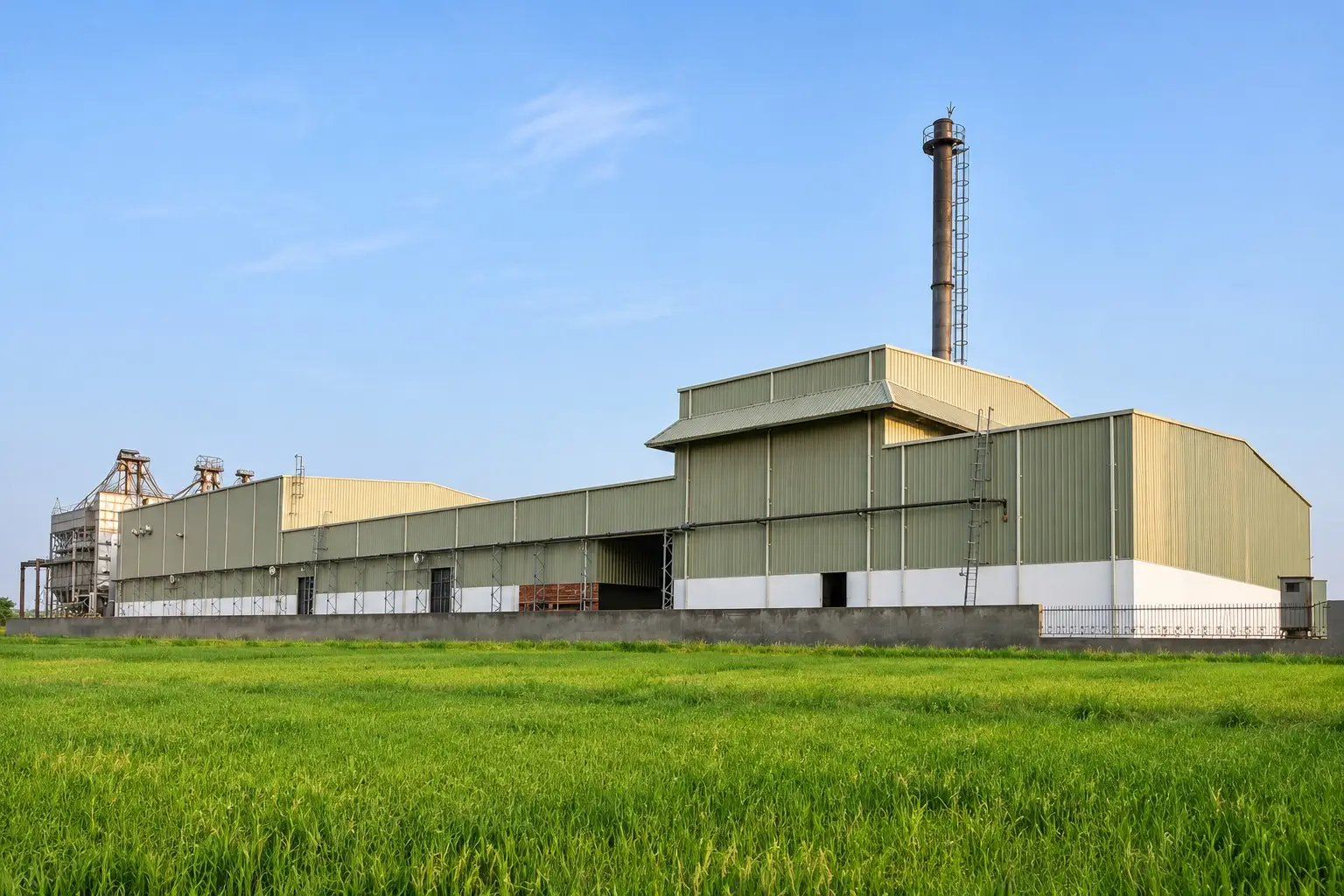
Bansal FineFoods runs an integrated basmati rice mill in India's basmati heartland: Karnal, Haryana. Two processing units with Bühler milling lines turn locally grown paddy into export-grade basmati and non-basmati rice for importers in 73 countries.

Who we are
An Indian rice mill rooted in the basmati belt
Bansal FineFoods began its journey in Karnal in 1940. Over the decades it has grown into a Government-recognised 3 Star Export House, and today our Indian rice mill supplies importers, distributors and private-label brands in markets such as Russia, Azerbaijan, Egypt and Canada.
As a basmati rice mill in India, we mill both basmati and non-basmati rice in four styles (raw, steam, creamy sella and golden sella), and pack it under our own brands or the buyer's label. Everything happens in-house, from paddy intake to the final export bag.
Unit 1: G.T. Road, opposite Agro Mall, Sector 37, Transport Nagar, Karnal, Haryana
Inside our basmati rice mill in India
01
Bühler milling lines
German-engineered husking, whitening and polishing that treats long basmati grains gently and keeps brokens low.
02
Sortex colour sorting
Optical sorters scan every grain and reject discoloured, chalky and black grains, for a lot that is 100% Sortex clean.
03
Parboiling and steaming
Dedicated soaking, steaming and drying for creamy sella, golden sella and steam rice, alongside raw rice milling.
04
Length grading
Graders separate full-length grains from brokens, so each lot matches its specification for grain length and broken percentage.
05
Quality testing
Every lot is checked for grain length, moisture, broken percentage and foreign matter before it is packed and shipped.
06
350,000 sq ft of space
Room across two units for milling, clean storage and packing, with capacity to handle bulk export orders.
Where we mill
Why our rice mill is in Karnal, Haryana
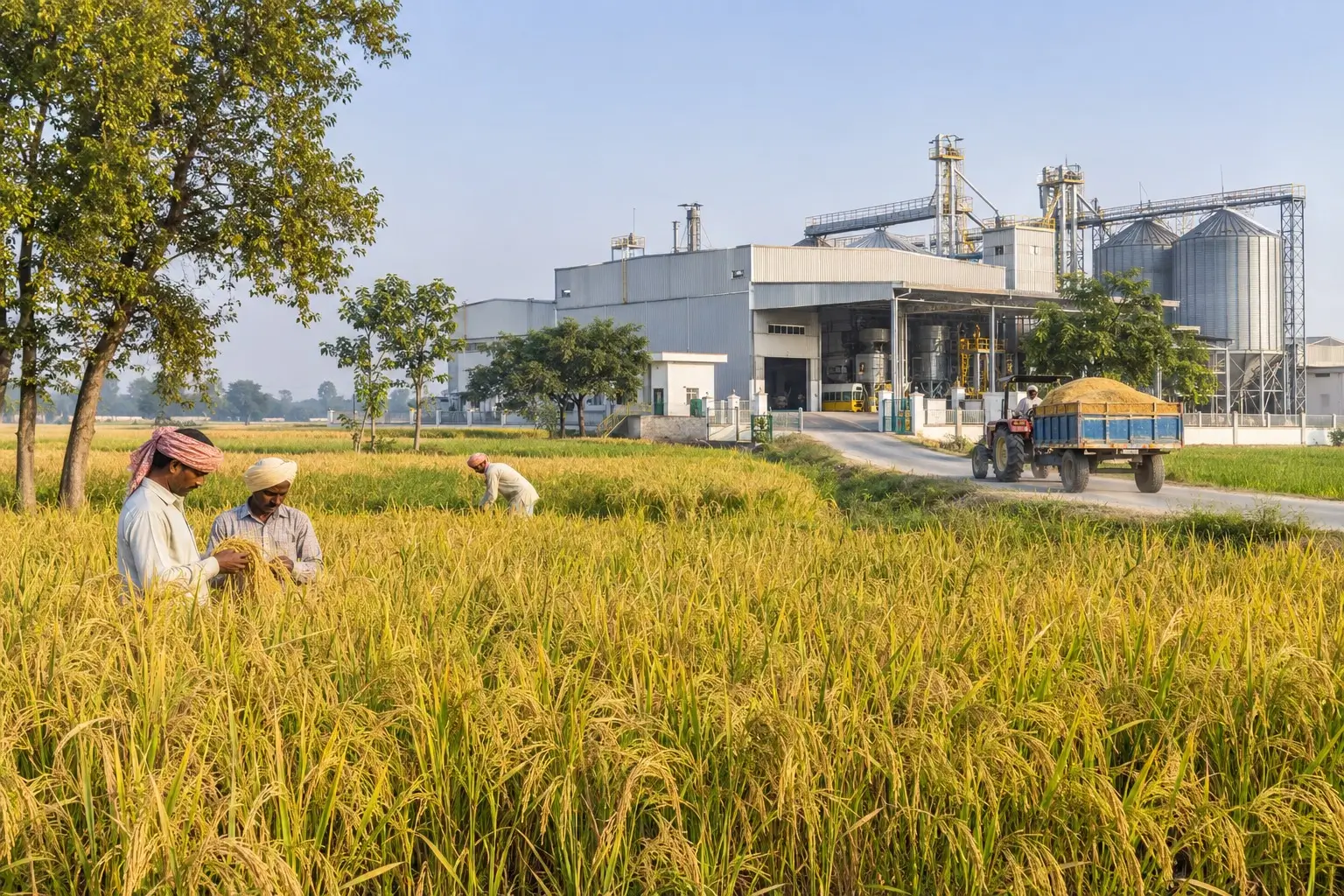
Haryana is one of India's main basmati-growing states, and Karnal lies inside the basmati geographical-indication region of the Indo-Gangetic plain. The district is also home to the Taraori grain market, long associated with basmati. Running a rice mill in Karnal puts us at the source, and keeps our rice mill in Haryana close to the basmati fields.
How our basmati rice mill works
01
Intake and cleaning
Each paddy lot is checked for moisture and purity, then cleaned and de-stoned to remove dust, straw and stones.
02
Steaming and parboiling
For sella grades, paddy is soaked, steamed and dried. Steam rice is lightly steamed. Raw rice skips this step.
03
Husking and whitening
Bühler lines remove the husk, then whiten and polish the grain gently to preserve its length.
04
Length grading
Graders separate full-length grains from brokens, so each lot meets its specification for broken grains.
05
Sortex colour sorting
Optical sorters remove discoloured, chalky and black grains, giving a clean, uniform lot.
06
Storage and packing
Rice is stored in clean, ventilated warehouses and packed in sizes from retail packs to bulk bags, under our brand or yours.
What leaves our basmati rice mill
8.45 mm
Longest grain (1121, 1509 & 1718 steam)
< 1%
Broken grains (basmati)
< 12–13%
Moisture
100%
Sortex clean
94%
Purity
Nil
Damaged grains (basmati)
Nil
Black grains
4
Milling styles
Rice varieties from our mill
Golden Sella
Basmati rice
Basmati rice mill vs a regular rice mill
| Stage | Regular rice mill | Basmati rice mill |
|---|---|---|
| Paddy | Any short or medium grain variety | Long-grain basmati paddy from the basmati-growing region |
| Husking and polishing | Speed and yield come first | Gentle settings that protect the long, slender grain |
| Grading | Basic separation of brokens | Tight length grading to meet export broken limits |
| Sorting | Often manual or partial | Optical colour sorting for a uniform, clean lot |
| Processing styles | Usually raw or parboiled only | Raw, steam, creamy sella and golden sella |
| Storage | Short holding before sale | Clean, ventilated storage; aged as per buyer contract |
What makes a rice mill one of the biggest in India?
Milling scale
Enough capacity and floor space to supply consistent volumes across the season.
Our mill: two units with 350,000 sq ft of production area in Karnal.
Milling technology
Modern husking, grading and sorting give uniform grains and fewer brokens.
Food-safety systems
Independent certification helps a supplier pass retailer and importer audits.
Export track record
Experience with documentation and destination rules keeps containers moving.
Range from one mill
Buying several varieties from one mill simplifies quality checks and logistics.
Years in the trade
Long relationships with growers mean steadier paddy supply year after year.
Who buys from our Indian rice mill
Importers
Full-container loads of basmati and non-basmati rice.
Distributors
Several varieties consolidated from one mill.
Wholesalers
Bulk bags in consistent, graded lots.
Private label
Rice milled and packed under your brand.
Food service
Grades suited to restaurants and catering.
A certified basmati rice mill in India
ISO 22000:2018 · BRCGS Food Safety · HACCP · GMP · Halal · FSSAI licensed · APEDA registered · US FDA registered
Rice mill FAQs
Our rice mill in Karnal, Haryana runs as two units. Unit 1 is on G.T. Road (Sector 37, Transport Nagar) and Unit 2 is at Village Kurali, both in Karnal district.
There is no single official ranking of the biggest rice mill in India. Large integrated mills are concentrated in India's basmati belt across Punjab and Haryana, and size is usually judged by milling capacity, storage and exports. Bansal FineFoods operates two units with 350,000 sq ft of production area in Karnal and is a Government-recognised 3 Star Export House.
Look at the mill's location in the basmati-growing region, its milling and sorting machinery, its food-safety certifications, the range of varieties and styles it mills, and its export track record. Ask for samples and specifications for the exact variety and style you need.
A basmati rice mill cleans paddy, removes the husk, whitens and polishes the grain, grades it by length and colour-sorts it. Because basmati is valued for its long grain, the mill is set up to keep grains intact and broken grains low.
Raw rice is milled without heat treatment. Steam rice is lightly steamed before milling, which firms the grain. Sella (parboiled) rice is soaked, steamed and dried before milling: creamy sella is lighter in colour, while golden sella is steamed longer for a golden grain. Both keep their grains separate after cooking.
Our Indian rice mill produces six basmati varieties (1121, 1509, 1718, 1401, Pusa and Traditional) and seven non-basmati varieties (Sugandha, Sharbati, PR11, PR106, RH10, IR64 and round rice), in raw, steam, creamy sella and golden sella styles.
Yes. We mill and pack basmati and non-basmati rice under the buyer's own brand, in sizes from retail packs to bulk bags.
Rice from our mill in Karnal is shipped to buyers in 73 countries, including Russia, Azerbaijan, Egypt and Canada. Contact our export team to discuss shipping to your country.
Looking for a reliable basmati rice mill in India?