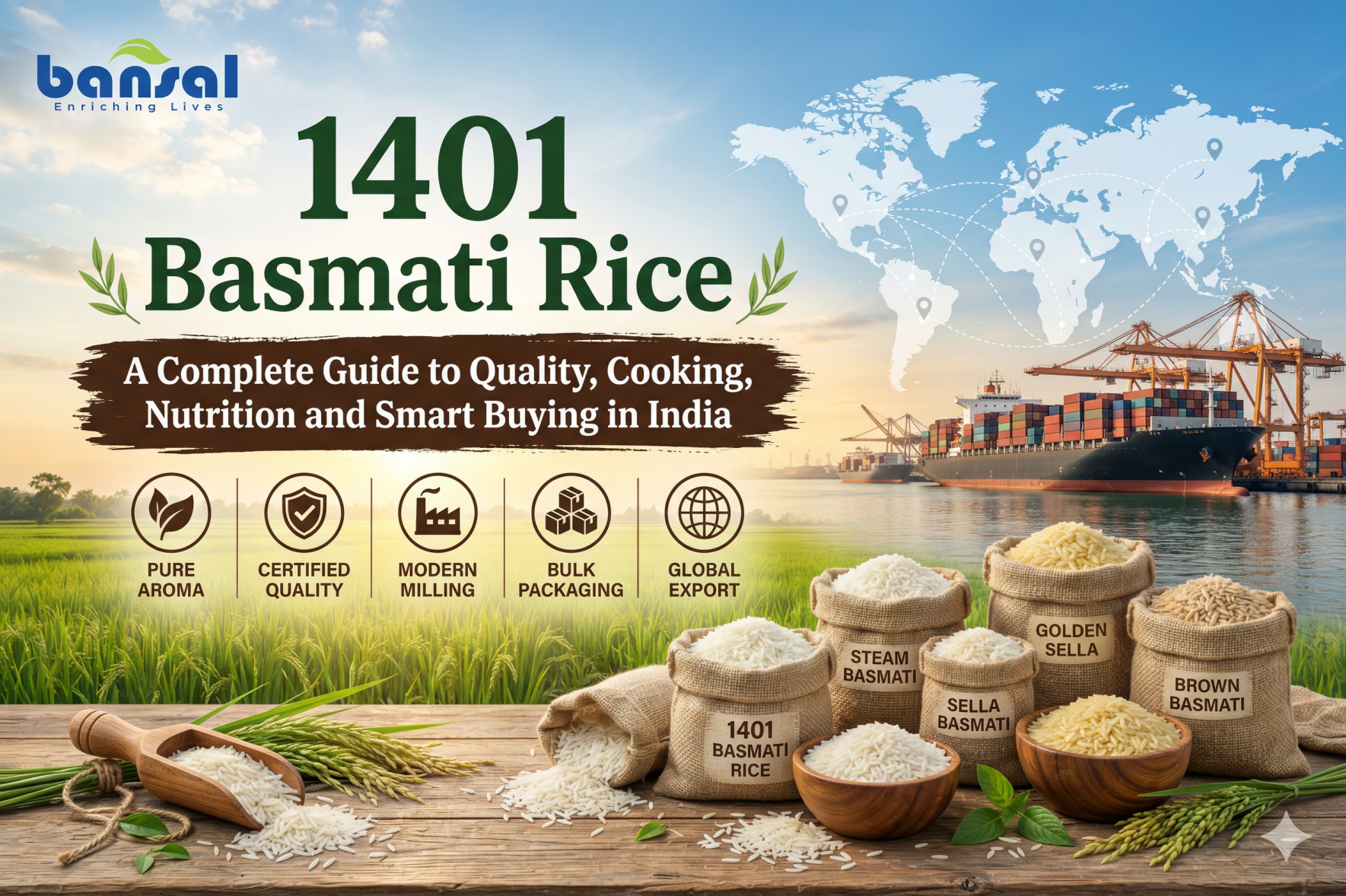
Rice is not just food in India. It is part of weddings, festivals, Sunday lunches and the quiet comfort of dal-chawal after a long day. Among the many varieties found in Indian markets, 1401 basmati rice has built a loyal following because it delivers long, slender grains, a pleasant fragrance and a fluffy finish at a price that suits regular household use. Many buyers search for basmati rice 1401 without knowing exactly what makes it different from other basmati types, how to cook it properly or how to identify a genuine pack. This guide answers those questions in plain language, drawing on the product knowledge and processing standards followed at Bansal Fine Foods, a Karnal-based rice, pulses, spices and seeds company with a heritage dating back to 1940.
What Is 1401 Basmati Rice and Where Does It Come From?
Basmati is a long-grain aromatic rice grown in the Indo-Gangetic plains, mainly across Haryana, Punjab, Uttar Pradesh, Uttarakhand, Delhi, Himachal Pradesh and Jammu and Kashmir. The word is commonly linked to the idea of fragrance, and the rice carries a geographical indication that protects its identity in India. Within this family there are traditional varieties and newer improved ones developed by agricultural research institutions. The 1401 variety is commonly traded as part of the Pusa group of improved basmati types, which were bred to combine the classic basmati character with better field performance.
Farmers generally prefer improved basmati varieties because they offer dependable yields and stand better in the field than tall traditional plants. For the buyer, that agricultural reliability translates into steady availability and fairer pricing across the year. Bansal Fine Foods lists this variety next to 1121, 1509, 1718 and Pusa basmati in its range, which reflects how established it is in both domestic kitchens and export markets. Its place on that list is earned through consistent demand, not novelty.
Key Characteristics That Make Basmati Rice 1401 a Practical Choice for Indian Households
Every rice variety has its own personality, and understanding it helps you cook better and spend smarter. These are the qualities buyers most often notice when they cook this variety at home.
- Long and slender grains: Raw grains are visibly long and thin, and they stretch lengthwise rather than swelling sideways when cooked. This gives the finished plate an elegant look that suits biryani and pulao.
- Natural fragrance: A gentle, nutty aroma rises while the rice cooks. It is lighter than the very intense scent of aged premium varieties, which many families actually prefer for daily meals.
- Fluffy, separate texture: When rinsed, soaked and cooked correctly, the grains stay dry and separate instead of clumping. This makes the rice forgiving for beginners and reliable for large gatherings.
- Balanced value: It offers recognisable basmati character at a more accessible price than some of the longest-grain varieties, which makes it popular with restaurants, caterers and budget-conscious homes.
Keep in mind that grain length, aroma and cooking behaviour also depend on ageing, milling and storage, so the same variety can taste different from one supplier to another.
Creamy, Golden and Steam: Understanding the Different Forms of 1401 Basmati Rice
Bansal Fine Foods offers this variety in three commonly requested forms, each suited to different cooking needs and buyer preferences.
Creamy rice is made through a sella-style process, in which paddy is parboiled before milling and the grain takes on a pale cream shade. Parboiling makes grains firmer and more resistant to breakage, so creamy rice holds its shape in long, slow-cooked recipes. Caterers and restaurants often choose it for large biryani batches because it is hard to overcook.
Golden rice is also parboiled but processed to a deeper amber-gold tone. It tends to be even sturdier, with grains that stay intact after reheating or holding on a buffet. Households that cook for functions often appreciate this resilience.
Steam rice is processed with a steaming step that stabilises the grain and typically gives a whiter appearance with a softer bite than sella. It cooks in relatively less time and suits everyday pulao, jeera rice and plain steamed servings. If you are unsure which form to buy, think about the dish: choose creamy or golden for biryani and bulk cooking, and steam for light daily meals.
How Quality Is Maintained from Paddy Selection to Final Packing at Bansal Fine Foods
Quality in rice is built in stages, and a shortcut at any stage shows up on the plate. Bansal Fine Foods has been in the agri trade since 1940 and is recognised as an Export Trading House by the Ministry of Commerce, with 3 Star Export House status, two factories in Karnal, Haryana, and a stated production area of 350,000 square feet. Its machinery is sourced from Buhler of Germany, and processing runs through automated systems designed to keep size, colour and output uniform.
The stages that matter most for the quality of this rice include the following:
- Paddy selection and ageing: Good paddy is chosen for purity and moisture, then aged so that the grain firms up and develops better cooking behaviour. Rushed, unaged rice tends to turn sticky.
- Cleaning and de-stoning: Mechanical cleaning removes stones, husk and foreign matter, which protects both the eater and the machinery downstream.
- Milling, polishing and grading: Controlled milling reduces breakage, while sorting by size and colour removes broken and discoloured grains for a uniform pack.
- Hygienic packing: Export-grade hygiene control and sealed packaging keep moisture and pests away until the bag reaches your kitchen.
Nutrition and Health Considerations of Eating 1401 Basmati Rice Every Day
Rice is mainly a source of carbohydrate energy, and white basmati is no exception. A cooked cup typically provides roughly 200 calories, a small amount of protein, very little fat and no gluten, which makes it suitable for people avoiding gluten. Basmati varieties are generally reported to have a moderate glycaemic index compared with many other white rices, though the exact figure depends on the variety, ageing, parboiling and cooking time. People managing diabetes should still watch portion size, pair rice with dal, vegetables and salad, and follow the advice of their doctor or dietitian. Combining rice with fibre and protein slows digestion and creates a more balanced plate. Parboiled forms retain a little more of the grain’s natural nutrients than fully polished white rice, although the difference is modest. Treat rice as one part of a varied diet rather than the entire meal, and the benefits of this staple are easy to enjoy.
Step-by-Step Method to Cook Basmati Rice 1401 So Every Grain Stays Separate and Fragrant
Perfect rice is mostly technique, and the following method works well for this variety at home.
Start by measuring the rice and rinsing it gently in cool water two or three times until the water runs mostly clear, which removes surface starch that causes stickiness. Soak the grains for twenty to thirty minutes, because soaking helps them cook evenly and stretch to their full length. Use roughly one and a half to one and three-quarter cups of water for each cup of soaked rice, bring it to a boil, reduce the heat to low, cover tightly and cook for around ten to twelve minutes. Switch off the flame and let the pot rest, covered, for five to ten minutes before fluffing with a fork.
- Use a heavy-bottomed pan, or a pressure cooker with one whistle on a low flame, so heat spreads evenly and the base does not catch.
- Add a teaspoon of ghee or oil and a pinch of salt to the water for flavour and better separation.
- Avoid stirring while the rice cooks, because stirring breaks the delicate grains and releases starch.
Creamy and golden forms usually need a slightly longer soak and cooking time than steam rice, so always follow the instructions printed on the pack.
Which Indian Dishes Taste Best When Prepared with 1401 Basmati Rice?
Because the grains stay long and separate, this rice suits a wide range of Indian recipes. In biryani, the layers of masala, meat or vegetables and rice need grains that absorb flavour without turning mushy, and parboiled forms excel here. In pulao and jeera rice, the gentle fragrance pairs well with whole spices such as cumin, bay leaf and cardamom. For everyday meals, plain steamed rice with dal, rajma, kadhi or chole is a classic combination, and the rice also works in vegetable khichdi, lemon rice and even kheer on festive days. Restaurants favour it for consistency, and homemakers appreciate that leftovers reheat without becoming a lump.
How to Choose, Buy and Store Genuine Basmati Rice 1401 in India
With so many brands on the shelf, knowing what to check makes the difference between a satisfying purchase and a disappointing one.
- Check the grain: Look for uniformly long, slender grains with minimal broken pieces and no chalky white patches. A high proportion of broken grains suggests poor milling or handling.
- Smell the rice: Genuine basmati has a mild natural fragrance. A strong artificial perfume is a warning sign.
- Read the label: Reliable packs show the variety name, net weight, batch or packing date, FSSAI licence number and the manufacturer’s address. Anonymous loose rice offers none of this traceability.
- Ask about ageing: Well-aged rice cooks drier and more fragrant than fresh rice, so ask your supplier how long the stock has been matured.
- Prefer an established source: A producer with decades of experience and visible certifications is more likely to maintain consistency from one purchase to the next.
Once purchased, store the rice in an airtight steel or food-grade container in a cool, dry place away from direct sunlight and damp walls to prevent insects and moisture. Properly stored, it keeps its aroma for months.
1401 Basmati Rice vs 1121 vs 1509: Which Variety Should You Pick?
Buyers often ask how this variety compares with other popular basmati types. The 1121 variety is known for very long grains and dramatic elongation, and it commands a premium. The 1509 variety is widely used and valued for its good length and strong market demand. The variety discussed here sits comfortably in the middle, offering authentic basmati cooking character at a friendlier price. None of these is simply better than the others, because the right choice depends on budget, dish and occasion. A restaurant preparing a celebratory dum biryani might lean toward 1121, while a family cooking daily pulao may find this variety delivers excellent value. Bansal Fine Foods supplies all of these, so buyers can compare cooked samples before deciding. Testing a small quantity first is sensible, because taste matters as much as any specification.
Why Families, Retailers and Distributors Trust Bansal Fine Foods for 1401 Basmati Rice
Trust is the most important ingredient in a food purchase. Bansal Fine Foods has served buyers for over eight decades, exports to 73 countries and works with more than a thousand active distributors. Clients from Russia, Egypt, Canada and Azerbaijan have praised its punctuality and consistent quality, and the same discipline applies to supplies for the Indian market. Retailers, caterers and distributors who want 1401 basmati rice in bulk can contact the team on +91-83989-10400 or at info@bffpl.com, or visit the unit opposite Agro Mall on G.T. Road, Karnal, Haryana. The office is open Monday to Saturday, and samples and quotations can be requested through the website.
Final Thoughts on Choosing 1401 Basmati Rice with Confidence
This variety proves that good basmati does not have to be extravagant. Long slender grains, a pleasant aroma, flexible forms and sensible pricing make it a dependable choice for biryani, pulao and daily meals. By learning to read labels, judge grains, cook with the right technique and buy from an experienced source, you can bring home consistent results every time. Whether you are a homemaker, caterer, retailer or distributor, a trusted partner like Bansal Fine Foods can help you source quality rice along with the wider range of pulses, spices and seeds you need.