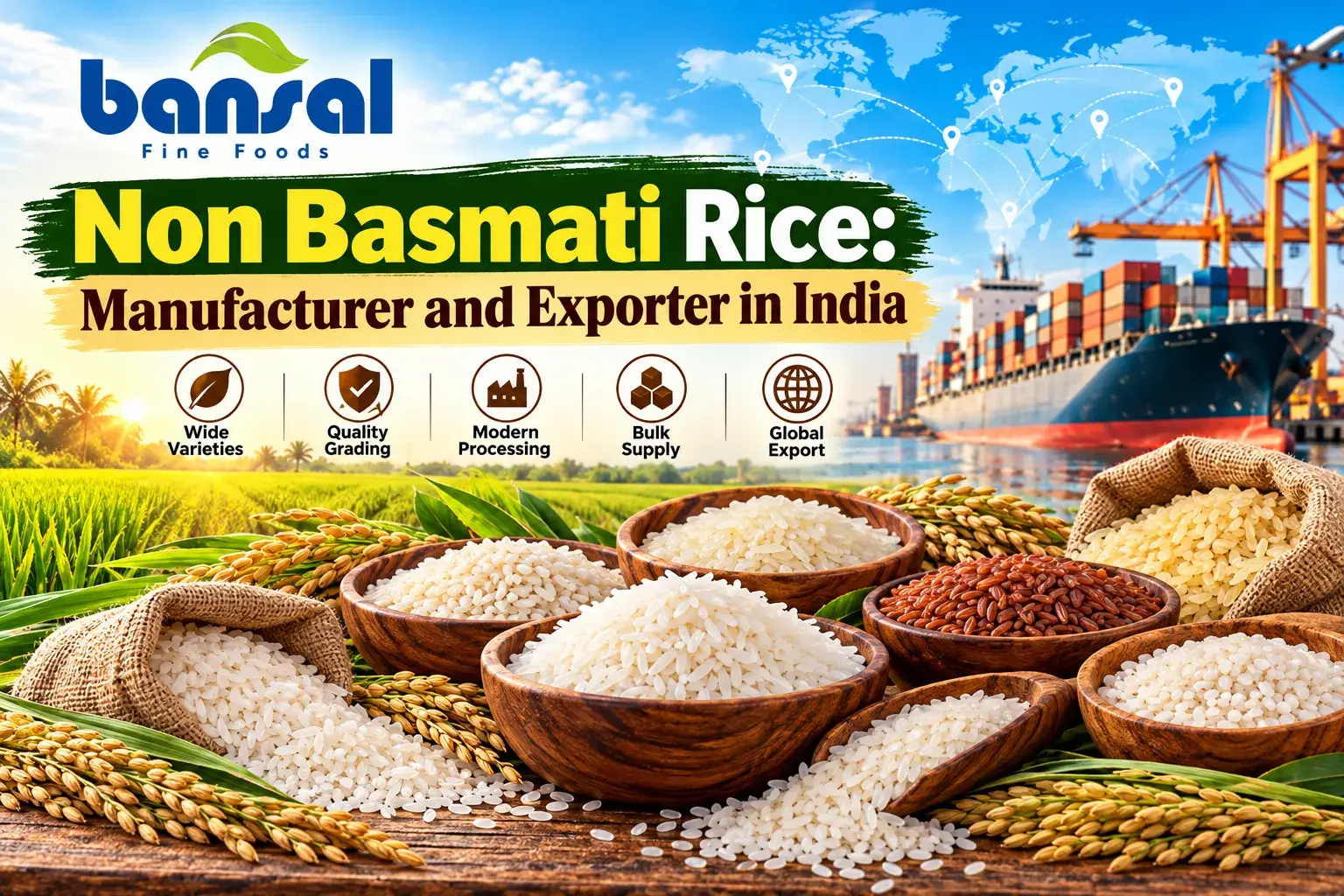
Rice is one of the most widely consumed food grains in the world. It is an important part of daily meals across India, Asia, Africa, the Middle East, and several other regions. While Basmati rice is known for its long grains and aroma, non-Basmati rice also holds a major place in the global rice market. It is valued for its variety, availability, cooking properties, and suitability for different cuisines.
With growing demand from households, restaurants, food processing companies, wholesalers, and international buyers, the need for reliable rice suppliers has increased. Businesses looking for consistent quality and dependable supply often prefer working with an experienced non basmati rice manufacturer that understands grain selection, processing, grading, and packaging requirements.
Similarly, international buyers depend on a professional non basmati rice exporter to source rice that meets their quality expectations and delivery requirements.
Bansal Fine Foods understands the importance of quality in the food grain industry. By focusing on product quality, careful sourcing, and customer requirements, the company aims to serve buyers looking for dependable rice products for domestic and international markets.
What Is Non-Basmati Rice?
Non-Basmati rice refers to all varieties of rice other than Basmati. Unlike Basmati rice, which is particularly recognised for its distinctive aroma and elongated grains, non-Basmati rice includes different grain sizes, textures, and cooking characteristics.
These rice varieties are consumed in different regions and are used to prepare everyday meals, traditional dishes, restaurant recipes, and various processed food products.
Non-Basmati rice is available in short, medium, and long-grain varieties. Depending on the variety, it may have a soft, sticky, firm, or fluffy texture after cooking.
Some common applications include:
- Daily household meals and regular rice consumption.
- Preparation of biryani, pulao, fried rice, and regional dishes.
- Restaurant, hotel, and catering requirements.
- Food processing and packaged food production.
- Wholesale distribution and retail packaging.
- Institutional food supply and bulk procurement.
Its wide range of applications makes non-Basmati rice an important product category in the domestic and international food industry.
Why Is Non-Basmati Rice in High Demand?
Non-Basmati rice has strong demand because it meets the everyday food requirements of a large consumer base. Its different varieties allow buyers to select rice according to their cooking preferences, regional food habits, and budget.
Here are some important factors contributing to its demand.
- Suitable for Everyday Consumption
Rice is a staple food in many households. Non-Basmati varieties are widely used for everyday meals because buyers can choose from different grain types according to their requirements.
These varieties are suitable for regular cooking and can be included in a wide range of traditional recipes.
- Multiple Grain Varieties
Non-Basmati rice is available in several varieties, including long-grain, medium-grain, and short-grain options. Each variety offers different cooking characteristics.
This variety makes it suitable for different cuisines and food preparation methods.
- Suitable for Different Food Industries
Restaurants, hotels, catering businesses, food manufacturers, and institutional buyers require rice in different quantities and specifications.
Non-Basmati rice offers multiple sourcing options for these businesses, making it an important product in the food supply chain.
- Availability in Different Price Ranges
Non-Basmati rice is available in different grades and varieties. This allows buyers to select products based on their quality expectations and purchasing budgets.
For wholesalers and distributors, having access to different rice varieties also helps them serve a wider customer base.
- Growing International Trade
India is an important participant in the international rice trade. Non-Basmati rice varieties are supplied to different countries to meet the food requirements of international consumers.
This creates opportunities for businesses working with established rice manufacturers, suppliers, and exporters.
Importance of Choosing a Reliable Non Basmati Rice Manufacturer
Selecting the right manufacturer is an important decision for wholesalers, distributors, retailers, and bulk buyers. Rice quality can vary depending on the raw material, processing methods, storage conditions, and grading standards followed during production.
An experienced non basmati rice manufacturer understands these factors and works towards maintaining consistency throughout the production process.
Here are some important qualities buyers should consider when selecting a rice manufacturer.
- Quality Raw Material Selection
The quality of finished rice depends significantly on the paddy selected for processing. Manufacturers need to focus on sourcing suitable raw materials from reliable agricultural suppliers.
Proper raw material selection helps maintain the desired grain characteristics and product quality.
- Modern Rice Processing Facilities
Rice processing involves several stages, including cleaning, dehusking, milling, polishing, grading, and sorting.
Modern processing equipment helps manufacturers remove unwanted materials, separate broken grains, and maintain uniformity in the finished product.
Proper processing also helps improve the overall appearance and usability of rice.
- Consistent Grain Quality
Consistency is important for businesses purchasing rice in bulk. Buyers expect similar grain characteristics across different batches.
Manufacturers should maintain suitable quality checks to monitor grain size, moisture levels, broken grain percentage, and foreign matter.
These checks help ensure that the supplied rice meets the agreed product specifications.
- Hygienic Packaging and Storage
Rice needs proper packaging and storage to maintain its quality during transportation and distribution.
Packaging materials should protect the product from moisture, contamination, and external damage.
Manufacturers should also follow suitable storage practices to maintain the quality of rice before dispatch.
- Ability to Handle Bulk Orders
Wholesalers, distributors, retailers, and international buyers often require rice in large quantities.
A manufacturer with organised procurement, processing, and packaging operations can support bulk purchasing requirements more effectively.
- Transparent Business Communication
Clear communication helps buyers understand product specifications, available varieties, packaging options, pricing, and delivery schedules.
A professional manufacturer should be able to provide relevant product information and discuss buyer requirements before confirming an order.
Popular Varieties of Non-Basmati Rice
Non-Basmati rice includes several varieties that serve different culinary and commercial purposes. Understanding these varieties helps buyers select the right product for their target markets.
Some commonly traded varieties include:
- Sona Masoori Rice
Sona Masoori is a popular medium-grain rice variety widely consumed in South India. It is known for its lightweight texture and is commonly used in everyday meals.
It is suitable for preparing steamed rice, lemon rice, curd rice, and several traditional South Indian dishes.
- IR 64 Rice
IR 64 is a widely traded non-Basmati rice variety. It is commonly used for household consumption, institutional food supply, and commercial distribution.
Its availability and suitability for different cooking applications make it an important variety in domestic and international markets.
- Swarna Rice
Swarna rice is another commonly consumed non-Basmati variety. It is used in everyday meals and is popular in several Indian regions.
It is suitable for households, food service businesses, and bulk rice procurement.
- PR 11 and PR 14 Rice
PR 11 and PR 14 are non-Basmati rice varieties used for different food applications.
Their grain characteristics make them suitable for regular consumption and certain commercial cooking requirements. Buyers can select the appropriate variety based on grain specifications and intended use.
- Broken Rice
Broken rice consists of rice grains that break during milling and processing. It is commonly used in food manufacturing, porridge preparation, traditional dishes, and other food applications.
It is an important product category for buyers looking for rice suitable for specific processing and commercial requirements.
Role of a Non Basmati Rice Exporter in International Trade
International rice trade involves several activities beyond simply supplying the product. Exporters need to understand buyer requirements, product specifications, packaging standards, documentation, and transportation arrangements.
A professional non basmati rice exporter plays an important role in connecting Indian rice suppliers with international markets.
The exporter helps buyers source suitable rice varieties while coordinating the commercial and logistical requirements associated with international shipments.
Some important responsibilities include:
- Understanding International Buyer Requirements
Different countries have different food preferences and rice consumption patterns.
For example, some markets prefer long-grain rice, while others have greater demand for medium-grain or short-grain varieties.
Exporters need to understand these preferences before recommending suitable products.
- Maintaining Product Quality
International buyers expect rice shipments to meet agreed quality specifications.
Important parameters may include:
- Grain length and uniformity.
- Moisture content.
- Broken grain percentage.
- Foreign matter.
- Discolouration and damaged grains.
- Packaging condition.
- Food safety and applicable regulatory requirements.
Maintaining these parameters helps build trust between exporters and overseas buyers.
- Export Documentation
International shipments require appropriate commercial and regulatory documentation.
Depending on the destination and applicable regulations, documentation may include commercial invoices, packing lists, shipping bills, certificates of origin, phytosanitary certificates, and other required certificates.
Exporters must coordinate these requirements to support smooth customs clearance and delivery.
- International Packaging Solutions
Packaging plays an important role in protecting rice during international transportation.
Exporters may offer different packaging options according to the buyer’s requirements, product specifications, and destination market regulations.
Common packaging options include:
- 5 kg retail bags.
- 10 kg consumer packs.
- 25 kg bulk bags.
- 50 kg commercial bags.
- Customised private-label packaging, where available.
Suitable packaging helps protect rice during storage, handling, and transportation.
- Logistics and Shipment Coordination
International rice shipments require proper coordination between suppliers, freight forwarders, shipping companies, and buyers.
Exporters need to plan shipment schedules, transportation arrangements, container loading, and dispatch documentation.
Efficient logistics management helps reduce delays and supports reliable product delivery.
Why India Is an Important Market for Non-Basmati Rice
India has a well-established rice cultivation and processing industry. Different agricultural regions produce rice varieties with distinct grain characteristics, making the country an important source for both Basmati and non-Basmati rice.
The country’s agricultural diversity supports the availability of several non-Basmati varieties for domestic consumption and international trade.
There are several reasons why international buyers consider India for non-Basmati rice sourcing.
Wide Variety of Rice: Indian suppliers offer multiple rice varieties to meet different cooking and commercial requirements.
Established Processing Industry: India has rice mills and processing facilities that support cleaning, milling, grading, sorting, and packaging operations.
Agricultural Production: Different rice-growing regions contribute to the availability of various grain types.
Export Infrastructure: Established ports, logistics networks, and trade channels support the movement of rice to international markets.
Multiple Buyer Segments: Indian rice suppliers serve wholesalers, distributors, food manufacturers, retailers, and institutional buyers.
For international businesses, sourcing from India provides access to a broad selection of rice products and established supply networks.
How to Select the Right Non-Basmati Rice for Your Business
Choosing the right rice variety is important for maintaining product quality and meeting customer expectations.
Whether you operate a supermarket, restaurant, food processing company, wholesale distribution business, or international trading company, consider the following factors before purchasing.
- Identify Your Target Market
Understand the rice preferences of your customers. Different regions have different requirements regarding grain size, texture, cooking quality, and price.
Selecting rice according to your target market can help improve product acceptance.
- Check Grain Specifications
Before placing a bulk order, review the product specifications carefully.
Check grain length, broken percentage, moisture content, purity, and other relevant quality parameters.
- Evaluate Supplier Reliability
Work with a manufacturer or exporter that can provide clear product information and discuss your purchasing requirements.
You should also understand the supplier’s production capacity, sourcing arrangements, and delivery commitments.
- Review Packaging Requirements
Packaging should match your distribution model.
Retail businesses may need smaller consumer packs, while wholesalers and institutional buyers may prefer larger bags.
International buyers may also require customised packaging according to local market preferences.
- Discuss Pricing and Delivery Terms
Rice prices can vary depending on variety, quality, quantity, packaging, and market conditions.
Discuss the complete commercial terms before confirming the purchase order.
For international shipments, also clarify applicable Incoterms, freight arrangements, insurance responsibilities, and delivery timelines.
Bansal Fine Foods: Your Partner for Quality Rice Products
Finding a dependable rice supplier is important for businesses that require consistent product quality and reliable supply arrangements.
Bansal Fine Foods focuses on serving the food grain market with an emphasis on product quality, customer requirements, and dependable business relationships.
For buyers looking for a reliable non basmati rice manufacturer or an established sourcing partner, working with a company that understands rice quality and market requirements can make the procurement process easier.
Bansal Fine Foods aims to support different buyer segments, including wholesalers, distributors, retailers, and businesses involved in food supply.
The company recognises that different customers have different purchasing needs. While some buyers require rice for everyday consumption, others need products for commercial kitchens, bulk distribution, or international trade.
Important considerations when choosing a rice supplier include product specifications, grain quality, packaging requirements, order quantities, and supply arrangements.
By keeping these factors in mind, Bansal Fine Foods aims to build long-term relationships with customers seeking quality rice products.
For businesses looking for a non basmati rice exporter, understanding the supplier’s export capabilities, documentation support, packaging options, and shipment arrangements is equally important.
Buyers should contact the company directly to discuss available rice varieties, product specifications, bulk order requirements, and export enquiries.
Growing Opportunities in the Global Non-Basmati Rice Market
The global rice market continues to serve a large consumer base because rice remains an essential food product in many countries.
Non-Basmati rice has an important role in this market due to its wide range of varieties and everyday applications.
Changing food consumption patterns, population growth, urbanisation, and the expansion of food service businesses contribute to demand for different rice products.
Several opportunities are available for manufacturers and exporters.
Increasing Demand from Food Service Businesses
Restaurants, hotels, catering companies, and institutional kitchens require rice in large quantities.
These businesses often look for suppliers who can provide suitable grain varieties and consistent product specifications.
Growth in International Distribution
International wholesalers and distributors continue to source rice from established agricultural markets.
Indian rice suppliers can serve these buyers by offering suitable product varieties and organised export operations.
Demand for Private-Label Packaging
Retailers and food distribution companies may prefer rice products packed under their own brand names.
Private-label packaging provides an opportunity for suppliers to serve businesses with specific branding and packaging requirements, subject to available facilities.
Expansion of Food Processing Applications
Rice is used in various processed food products, including rice flour, snacks, breakfast products, and other food preparations.
This creates additional demand for specific rice varieties and grain specifications.
Frequently Asked Questions (FAQs)
- What is non-Basmati rice?
Non-Basmati rice refers to rice varieties other than Basmati. It includes short, medium, and long-grain varieties used for everyday meals, commercial cooking, and food processing.
- What are the popular varieties of non-Basmati rice in India?
Some popular varieties include Sona Masoori, IR 64, Swarna, PR 11, PR 14, and broken rice. Each variety has different grain characteristics and cooking applications.
- How do I choose a reliable non basmati rice manufacturer?
Look for a manufacturer that focuses on raw material quality, modern processing, proper grading, hygienic packaging, consistent product specifications, and reliable supply arrangements.
- What should international buyers check before selecting a non basmati rice exporter?
International buyers should review rice quality specifications, export documentation, packaging options, shipment arrangements, regulatory compliance, and the supplier’s ability to meet order requirements.
- Is non-Basmati rice suitable for bulk purchasing?
Yes. Non-Basmati rice is commonly purchased in bulk by wholesalers, distributors, retailers, restaurants, hotels, and food processing companies.
- What packaging options are available for non-Basmati rice?
Common packaging sizes include 5 kg, 10 kg, 25 kg, and 50 kg bags. Packaging availability depends on the supplier and buyer requirements.
- Why do international buyers source non-Basmati rice from India?
India offers multiple rice varieties, an established rice processing industry, agricultural production capacity, and developed export channels.
- Can non-Basmati rice be used in food processing?
Yes. Different varieties are used in rice flour production, snacks, breakfast products, porridge, and several other food applications.
Conclusion
Non-Basmati rice is an important part of the global food industry because of its wide variety, everyday consumption, and multiple commercial applications. From household meals to large-scale food processing and international distribution, these rice varieties serve different market requirements.
Choosing the right manufacturer or exporter is essential for maintaining product quality, ensuring consistent supply, and meeting customer expectations.
Bansal Fine Foods aims to serve buyers looking for quality rice products and dependable business relationships. Whether you are a wholesaler, distributor, retailer, or international buyer, selecting the right rice supplier can support your business requirements and long-term growth.
If you are looking for a dependable non basmati rice manufacturer or non basmati rice exporter, connect with Bansal Fine Foods to enquire about product availability, specifications, bulk orders, and business requirements.