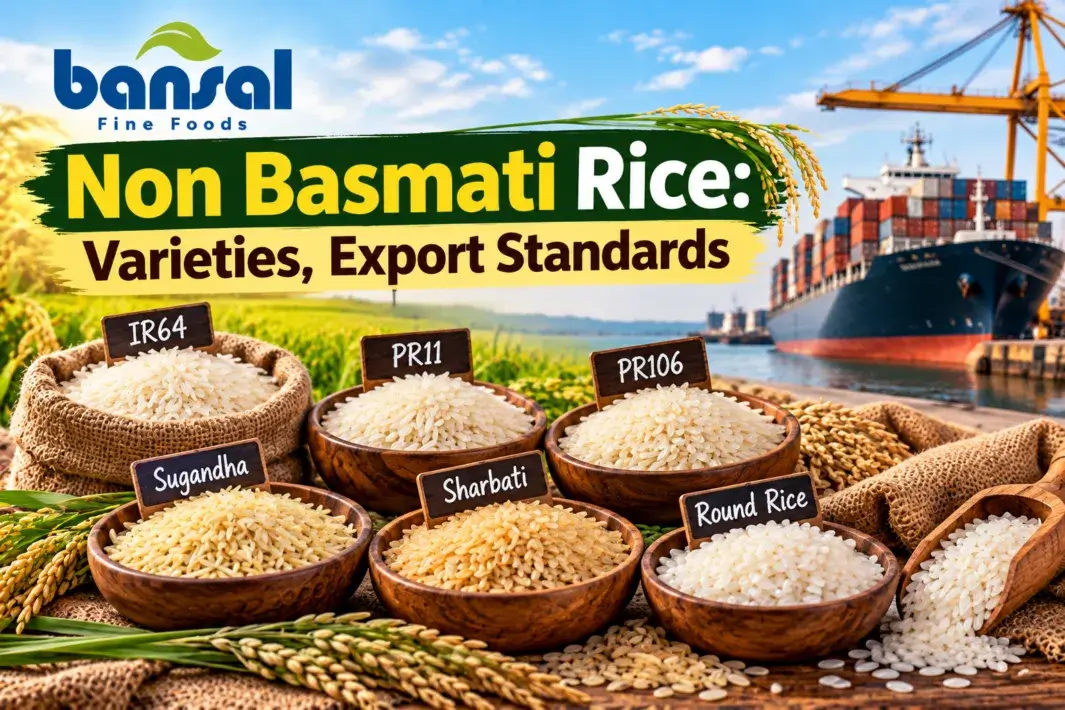
Basmati gets most of the attention, but a large share of the rice eaten around the world is non basmati. It feeds households across Africa, the Middle East, Southeast Asia and beyond, and it is the everyday rice in countless restaurants, canteens, hotels and retail shelves. Non basmati rice is valued for its reliable cooking, versatile texture, wide availability and practical pricing.
For importers, wholesalers and food businesses, the real question is who to buy from. Choosing the right non basmati rice exporter or manufacturer affects grain quality, consistency from shipment to shipment, documentation and delivery timelines.
At Bansal Fine Foods, we supply a range of non basmati rice varieties in multiple grades, forms and packaging options. This blog explains what non basmati rice is, how the main varieties differ, what separates a dependable exporter and manufacturer from an average one, and what to check before placing an order.
What Is Non Basmati Rice?
Non basmati rice covers all rice varieties that are not classified as basmati. Basmati is known for its very long, slender grain, distinctive aroma and pronounced elongation. Non basmati varieties do not carry that specific profile. Instead, they offer a wide spread of grain lengths (long, medium and short/round), textures and cooking behaviours.
Some non basmati varieties are long and slender with a clean, neutral taste. Others are medium grain with a softer, slightly sticky texture. Some, such as Sugandha, are mildly aromatic. This variety is exactly why non basmati rice suits so many cuisines. A West African jollof, a Middle Eastern rice pilaf, a South Indian meal and a Southeast Asian stir-fry all want slightly different grains, and there is a non basmati variety for each.
Why Non Basmati Rice Is in Such High Demand
Everyday affordability. Non basmati rice is generally more accessible in price than premium basmati, which makes it the natural choice for large households, institutional kitchens and mass-market retail.
Versatility. It works across a wide range of dishes, from plain steamed rice to fried rice, khichdi, idli and dosa batter, rice flour products and more.
Global consumption. Rice is a staple for a big portion of the world’s population, and many importing countries rely on non basmati grades for daily food supply.
Flexible processing. The same variety can be supplied as raw white rice, parboiled rice or steamed rice depending on the market’s cooking preference and shelf-life needs.
Popular Non Basmati Rice Varieties
IR64
IR64 is one of the most widely traded non basmati varieties. It has a long, slender grain, cooks to a firm and separate texture, and is commonly supplied as both white and parboiled rice. Because of its balanced price and quality, it is a staple in bulk export programmes, particularly for African and Middle Eastern markets.
PR11
PR11 is a popular long-grain variety from the Punjab belt. It is widely offered in parboiled and steam forms and is known for grains that stay intact and cook to a dry, fluffy finish. Buyers looking for a dependable long-grain option at a sensible price often select PR11.
PR106
PR106 is a high-yielding variety commonly grown in northern India. It is a practical choice for buyers seeking economical rice for large-volume needs, such as institutional supply, retail packs and food processing. It cooks to a soft, satisfying texture suited to daily meals.
Sugandha
Sugandha is a long-grain, mildly aromatic non basmati variety. It offers a pleasant natural fragrance and good elongation at a more accessible price than premium basmati. Many buyers use Sugandha as a value alternative for pulao, biryani-style dishes and everyday cooking.
Sharbati
Sharbati is a medium-to-long grain variety valued for its soft texture and good taste. It is popular in households and restaurants that want a tender, flavourful rice for regular meals, and it is often chosen as a step up from standard non basmati grades.
Round Rice
Round rice has a short, plump grain that cooks soft and slightly sticky. It suits dishes where binding is helpful, such as kheer, khichdi, sushi-style preparations and certain regional cuisines. It is in steady demand in markets that prefer softer, stickier rice.
You can view the full specifications for each variety on its product page: [IR64 Rice], [PR11 Rice], [PR106 Rice], [Sugandha Rice], [Sharbati Rice], [Round Rice].
Types of Non Basmati Rice by Processing
The same variety can be processed in different ways, and the right one depends on the destination market and end use.
Raw white rice. Milled and polished without parboiling. It cooks quickly, has a clean white appearance and is widely used in retail and food service.
Parboiled rice. The paddy is soaked, steamed and dried before milling. This process strengthens the grain, reduces breakage and helps it stay firm and separate when cooked. It also tends to handle long transit and storage better, which is one reason parboiled rice is common in export trade.
Steam rice. Similar to parboiled but processed with steam, often giving a lighter colour. Some markets prefer it for its appearance.
Broken grades. Rice is graded by the percentage of broken grains allowed, such as 5% broken, 25% broken and so on. Higher broken percentages are usually more economical and are used for processing, feed and price-sensitive markets.
What Makes a Reliable Non Basmati Rice Exporter?
Anyone can quote a price. A good exporter delivers the same quality on the tenth shipment as on the first. Here is what to look for.
Consistent grain quality. The variety, length, colour and broken percentage should match the agreed specification every time. Ask for samples before you commit, and compare the shipment against the sample.
Proper documentation. An experienced exporter handles the commercial and regulatory paperwork accurately. This typically includes the commercial invoice, packing list, bill of lading, certificate of origin and phytosanitary certificate, along with any additional documents the importing country requires.
Clear specifications. A dependable supplier states variety, milling degree, moisture, broken percentage, foreign matter and packaging in writing, so there is no confusion at the port.
Packaging flexibility. Different markets want different pack sizes. Good exporters offer options from small retail bags to 25 kg and 50 kg bags and bulk packing, along with private-label or custom branding where required.
Logistics support. Rice is a bulky commodity, so timing matters. A capable exporter coordinates container loading, shipping schedules and terms such as FOB, CFR or CIF, and keeps the buyer updated.
Policy awareness. Rice export rules in India can change, and non basmati rice has been subject to policy changes in the past. A reliable exporter stays on top of current regulations and tells buyers early about anything that could affect an order.
Why the Manufacturer Matters as Much as the Exporter
Many buyers focus on the exporting company but overlook where the rice is actually milled and processed. A strong non basmati rice manufacturer controls quality at the source.
Sourcing. Good rice starts with good paddy. Manufacturers who source carefully from trusted growing regions get more uniform grain.
Milling and polishing. Modern milling reduces breakage and gives a clean, uniform finish. Over-polishing or poor milling leads to more broken grains and lower cooking quality.
Sorting. Colour sorting and grading remove discoloured, damaged or foreign grains, which improves appearance and safety.
Moisture control. Correct moisture levels prevent spoilage and infestation during storage and shipping.
Hygiene and storage. Clean facilities, proper stacking and pest control protect the rice from farm gate to container.
When exporting and manufacturing work together under one supplier, buyers get better control over quality and fewer surprises.
Why Choose Bansal Fine Foods for Non Basmati Rice?
Bansal Fine Foods works with both basmati and non basmati rice, along with pulses, and we understand what bulk buyers and importers need. When you work with us as your non basmati rice exporter and manufacturer, you get:
- A wide variety range, including IR64, PR11, PR106, Sugandha, Sharbati and round rice
- Multiple processing options such as raw, parboiled and steam rice
- Quality checks at each stage, from sourcing and milling to sorting and packing
- Specification-based supply, so what you approve is what you receive
- Flexible packaging for retail, wholesale and bulk orders
- Export documentation support and smooth coordination of shipments
- A single supplier for your wider needs, including our [Basmati Rice] and [Pulses] categories
Whether you are an importer, distributor, retailer or food manufacturer, our team can help you choose the right variety and grade for your market and your budget.
How to Choose the Right Non Basmati Rice for Your Business
- Define your end use. Retail packs, food service, processing and institutional supply all need different grains and grades.
- Match the variety to your market. Ask which grain length and texture your customers prefer.
- Choose the processing type. Parboiled suits longer storage and firmer texture, while raw white suits quick-cooking and a soft finish.
- Set the broken percentage. Lower broken percentages cost more but give a more premium result.
- Ask for a sample. Cook it, check it and compare before you place a bulk order.
- Confirm packaging and terms. Agree pack size, labelling, quantity, payment terms and delivery terms in advance.
Frequently Asked Questions About Non Basmati Rice
1. What is the difference between basmati and non basmati rice?
Basmati rice has an extra-long grain, a distinct aroma and strong elongation on cooking. Non basmati rice covers all other varieties and includes long, medium and short grains, usually with a more neutral flavour and a wide range of textures.
2. Which non basmati rice variety is best for export?
It depends on the destination market. IR64 and PR11 are widely traded long-grain options, especially in parboiled form, while Sugandha suits buyers who want a mildly aromatic option and round rice serves markets that prefer soft, sticky grains.
3. What does “5% broken” mean in rice grading?
It means that up to 5% of the grains in the lot may be broken. A lower percentage indicates a cleaner, higher-grade product. Higher broken percentages are more economical and are often used for processing or price-sensitive markets.
4. Why is parboiled rice popular in exports?
Parboiling strengthens the grain, so it breaks less during milling and handling and cooks firm and separate. It also travels and stores well, which suits long shipping routes.
5. Can I get a sample before placing a bulk order?
Sampling is standard practice in rice trade. Buyers usually approve a sample against the agreed specification before confirming a bulk order. Contact our team to discuss sample availability for the variety you need.
6. What documents are needed to import non basmati rice from India?
Requirements vary by country, but typically include a commercial invoice, packing list, bill of lading, certificate of origin and phytosanitary certificate. Your importer or customs agent can confirm the exact list for your market, and we support the exporter-side paperwork.
7. What packaging sizes are available?
Non basmati rice is commonly supplied in retail packs as well as 25 kg and 50 kg bags and bulk packing. Custom and private-label options can be discussed based on order size.
Conclusion
Non basmati rice is the workhorse of the global rice trade. It is versatile, economical and suited to a huge range of cuisines and markets. Getting the best result comes down to choosing the right variety, the right processing type and, most importantly, the right partner.
Bansal Fine Foods combines careful sourcing, quality-focused processing and export support to deliver non basmati rice that meets your specifications shipment after shipment. Explore our range of non basmati rice varieties, and contact Bansal Fine Foods today for samples, pricing and bulk export enquiries.