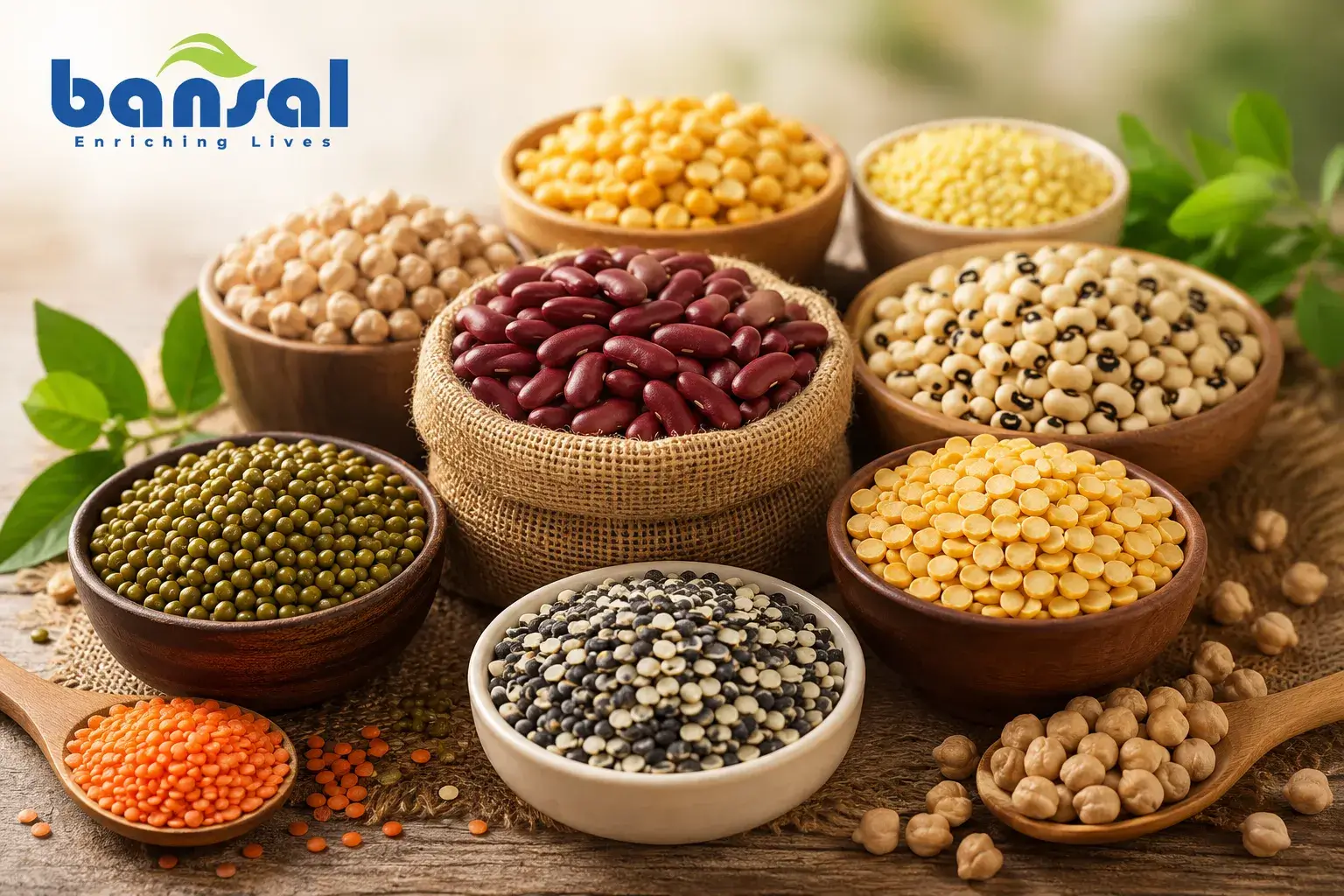
India is the largest producer and consumer of pulses in the world, and pulses like dal, rajma, and chana form the protein backbone of everyday meals across the country and far beyond it. As a trusted pulses exporter and supplier from India, Bansal FineFoods offers a wide range of pulses, sourced from the finest agricultural regions in India and processed to meet strict export standards for purity, consistency, and nutritional quality.
Every variety in our range goes through the same core process: careful sourcing, thorough cleaning, precision grading, and hygienic packing before it ships out for food processing, retail, or international distribution. What differs between varieties is protein content, cooking time, texture, and traditional culinary use — and those differences matter depending on whether you’re sourcing for a food processing plant, a retail private label, or a bulk export contract to a specific market.
In this post, we walk through each pulse in our range — Red Kidney Beans (Rajma), Red Lentil (Masoor Dal), Split Black Gram (Urad Dal), Split Chickpea Lentils (Chana Dal), Split Pigeon Peas (Toor Dal), Green Lentils (Moong Dal), Chickpeas (Kabuli Chana), and Black-Eyed Beans — so you can find the right pulse for your business. We’ve also answered some of the most common questions buyers and home cooks ask us about pulses.
Red Kidney Beans (Rajma)
Red Kidney Beans (Rajma) are one of the most recognisable pulses in Indian cooking, known for their firm texture, deep red colour, and rich, earthy taste. Botanically a variety of Phaseolus vulgaris, rajma holds its shape well during long, slow cooking, which is exactly why it’s the base of the classic North Indian dish rajma chawal as well as international bean curries and chilis. Because the grain is dense and takes longer to cook than most other pulses, rajma is typically soaked for 8–12 hours before cooking to soften the skin and shorten cooking time.
As a reliable Red Kidney Beans exporter, supplier, and manufacturer in India, Bansal FineFoods delivers export-grade rajma with consistent grain size, colour, and moisture content — qualities that matter a great deal to food processors and retail packers who need uniformity across every shipment. Our Rajma is suitable for global cuisines, retail packaging, and food processing applications, and it’s sourced from regions known for producing some of the best kidney beans in India, giving international buyers a dependable, high-protein pulse for bulk import.
Red Lentil (Masoor Dal)
Red Lentil (Masoor Dal) is prized for its quick-cooking nature and rich, nutritious profile, making it one of the most practical pulses for both home kitchens and commercial food processing. Its coral-orange colour and slightly sweet, nutty flavour set it apart from other lentils, and because the split, husked form cooks down quickly into a soft, almost creamy consistency, it’s a favourite for soups, dals, and purees across many cuisines, not just Indian ones.
Unlike whole legumes such as rajma or chickpeas, masoor dal generally doesn’t need long soaking, which makes it especially convenient for high-turnover food service and packaged food applications. As a trusted Red Lentil exporter, supplier, and manufacturer in India, Bansal FineFoods provides consistent quality masoor dal, carefully cleaned and graded to remove admixture before packing. This makes it well suited for global supply chains, food processing units, and retail brands that need a reliable, fast-cooking pulse with strong nutritional value.
Split Black Gram (Urad Dal)
Split Black Gram (Urad Dal) is known for its creamy texture and notably high protein content, and it plays a specific culinary role that few other pulses can replace. Urad dal is the foundation of the fermented batters used for dosa, idli, and vada across South Indian cuisine, and it’s equally essential for the slow-cooked, buttery richness of dal makhani in North Indian cooking. Its natural gumminess when cooked and ground is what gives these dishes their signature texture.
Beyond its culinary versatility, urad dal is valued for its protein density and is a staple ingredient for food manufacturers producing instant batters, papads, and snack mixes. As a leading Urad Dal exporter, supplier, and manufacturer in India, Bansal FineFoods supplies export-grade split black gram, cleaned and graded to consistent standards, making it ideal for traditional food production, retail packs, and industrial food processing across international markets.
Split Chickpea Lentils (Chana Dal)
Split Chickpea Lentils (Chana Dal) — split and polished Bengal gram — is known for its rich, nutty flavour and hearty bite, holding its shape better than most other split pulses even after extended cooking. With close to 12g of protein per 100g cooked, it’s often cited as one of the higher-protein dals, which makes it a popular choice in both traditional dal preparations and modern high-protein snack and flour products, since roasted and ground chana dal becomes besan, a staple in Indian cooking.
Chana dal’s versatility across curries, soups, and snacks makes it a consistent mover for both retail and food processing buyers. As a reliable Split Chickpea Lentils exporter, supplier, and manufacturer in India, we provide consistent, export-ready chana dal suitable for food processing and global markets, with careful attention to grading and moisture control so buyers receive the same quality batch after batch.
Split Pigeon Peas (Toor Dal)
Split Pigeon Peas (Toor Dal), also known as arhar dal, is the most widely consumed dal in India and a genuine kitchen staple across most Indian households. It forms the base of sambar in South India and a simple daily dal fry across the rest of the country, valued for its flavourful, slightly earthy taste and good source of folic acid, which makes it a commonly recommended pulse during pregnancy.
India remains the world’s largest exporter of toor dal by a wide margin, reflecting just how central this pulse is to both domestic consumption and global Indian diaspora demand. As a trusted Split Pigeon Peas exporter, supplier, and manufacturer in India, Bansal FineFoods delivers high-quality lentils ideal for daily consumption and food industries, processed and packed to meet the volume and consistency requirements of both retail distributors and large-scale food processing operations.
Green Lentils (Moong Dal)
Green Lentils (Moong Dal) is one of the lightest and easiest-to-digest pulses in the Indian pantry, which is exactly why it’s often the first solid dal introduced to babies and the go-to choice during recovery from illness. Available in split and whole forms, with or without husk, moong dal cooks quickly and delivers a mild, slightly sweet flavour that pairs well with simple tempering of cumin and ghee, as well as more elaborate khichdi and soup preparations.
Its balanced nutrition — a good mix of protein, fibre, and easily absorbed micronutrients — makes it popular not just in traditional cooking but also in modern health-focused food products like protein powders and sprouted snacks. As a leading Green Lentils exporter, supplier, and manufacturer in India, Bansal FineFoods offers premium quality moong dal for food processing, retail, and export markets, maintaining strict cleaning and grading standards so every shipment meets international purity benchmarks.
Chickpeas (Kabuli Chana)
Chickpeas, also known as Kabuli Chana, are a versatile, protein-rich legume used across a huge range of global cuisines — from Indian chole and curries to Middle Eastern hummus and falafel, as well as salads and roasted snacks. Unlike the smaller, darker desi chana, Kabuli chana has a larger, lighter-coloured grain with a milder flavour, which is part of why it’s so widely used in international recipes beyond South Asian cooking.
Because chickpeas are a dense, whole legume, they typically need 8–12 hours of soaking before cooking to soften properly and reduce cooking time. This versatility across cuisines, combined with steady global demand for hummus and plant-based protein products, keeps Kabuli chana as one of the more consistently traded pulses internationally. Bansal FineFoods supplies export-grade chickpeas suitable for curries, packaged foods, and retail markets, sourced and processed to meet the quality expectations of both traditional and modern food brands worldwide.
Black-Eyed Beans
Black-Eyed Beans, also known as lobia or cowpeas, are mild in flavour and notably quicker to cook than many other whole legumes, which makes them a convenient option for curries, salads, and stews. Unlike rajma or chickpeas, black-eyed beans generally don’t require a long overnight soak — a shorter soak or even none at all still produces a good texture, though soaking does shorten cooking time further and can reduce the gas-causing compounds common to legumes.
Packed with protein and fibre, black-eyed beans are a nutritious, budget-friendly pulse that performs well in both traditional Indian preparations and international dishes like Southern-style black-eyed pea stews. Bansal FineFoods supplies premium black-eyed beans processed to export-grade standards, making them a dependable choice for retail distributors, food processors, and international buyers looking for a versatile, easy-to-cook legume.
How to Choose the Right Pulse for Your Business
With eight varieties to choose from, buyers often ask us where to start. Here’s a quick way to think about it:
- For a hearty, high-protein legume for curries and chilis: Red Kidney Beans (Rajma) holds its shape well through slow cooking.
- For fast-cooking, high-turnover food service use: Red Lentil (Masoor Dal) needs no long soaking and cooks down quickly.
- For traditional batters and iconic dal preparations: Split Black Gram (Urad Dal) is essential for dosa, idli, and dal makhani.
- For a high-protein, versatile everyday dal: Split Chickpea Lentils (Chana Dal) suits curries, soups, and besan production.
- For India’s most widely consumed daily dal: Split Pigeon Peas (Toor Dal) is a reliable, high-volume staple.
- For an easy-to-digest, gentle pulse: Green Lentils (Moong Dal) works well for retail and health-focused food products.
- For international cuisines beyond South Asia: Chickpeas (Kabuli Chana) suit hummus, falafel, and global packaged food brands.
- For a quick-cooking, budget-friendly legume: Black-Eyed Beans fit both traditional and international stews and salads.
Frequently Asked Questions
Do all pulses need to be soaked before cooking? No. Whole legumes like rajma, chickpeas, and to a lesser extent black-eyed beans benefit from soaking for several hours or overnight because it softens the outer skin and cuts down cooking time significantly. Split, husked dals like masoor dal, moong dal, and chana dal generally don’t need long soaking and can be rinsed and cooked directly, though a short soak of 30 minutes to an hour can still improve texture.
Why is soaking pulses recommended even when it isn’t strictly necessary? Soaking helps reduce naturally occurring compounds in pulses that can cause bloating and gas, and it also improves the absorption of minerals like iron, calcium, and zinc by breaking down phytic acid. It doesn’t reduce the calorie content of the pulse, but it does make the nutrients easier for the body to use and generally shortens overall cooking time.
What is the difference between chana dal and toor dal? Chana dal is split, polished Bengal gram with a hearty, nutty flavour and a firmer bite that holds up well in curries, while toor dal (split pigeon peas) has a more distinct earthy taste and is the base of everyday dal preparations like sambar and dal fry across most of India. Toor dal is generally the more universally used everyday dal, while chana dal is prized for its higher protein content and use in besan flour.
Which pulse is highest in protein? Among common dals, chana dal is often cited as one of the higher-protein options, delivering close to 12g of protein per 100g cooked serving, compared to around 8g for moong dal. Rajma and chickpeas are also strong protein sources, particularly valued in vegetarian and plant-based diets for their combination of protein and fibre.
What’s the difference between Kabuli chana and desi chana? Kabuli chana (chickpeas) has larger, lighter-coloured grains and a milder flavour, and it’s the variety most commonly used internationally for hummus, falafel, and Mediterranean dishes. Desi chana is smaller and darker with a rougher coat and a stronger, earthier flavour, and it’s more commonly used in Indian-style curries and roasted snacks.
Do black-eyed beans need to be soaked like other beans? Not necessarily — black-eyed beans cook faster than most whole legumes and can be prepared with a shorter soak or even no soak at all, though skipping the soak will add roughly 15–30 minutes to the cooking time. A brief soak still helps reduce the gas-causing compounds found in most legumes.
Are pulses gluten-free and suitable for a vegetarian, high-protein diet? Yes, all pulses — including rajma, chana dal, moong dal, masoor dal, urad dal, toor dal, chickpeas, and black-eyed beans — are naturally gluten-free and are a core protein source in vegetarian and plant-based diets. They also provide dietary fibre, folate, iron, and magnesium, making them a nutrient-dense staple well beyond their protein content.
Which pulse does India export the most? Toor dal (split pigeon peas) is one of India’s largest pulse exports by volume, with India remaining the world’s leading exporter of both toor dal and moong dal. This reflects strong global demand from Indian diaspora communities as well as increasing international interest in plant-based protein sources.
What causes bloating after eating pulses, and does soaking help? Pulses contain natural sugars called oligosaccharides that the human digestive system can’t fully break down, and gut bacteria fermenting these compounds is what produces gas and bloating. Soaking pulses for several hours before cooking, and discarding the soaking water, helps reduce these compounds and generally makes pulses easier to digest.
Why Choose Bansal FineFoods as Your Pulses Exporter
Across all eight varieties, Bansal FineFoods maintains the same commitment: carefully cleaned, graded, and processed pulses that meet international export standards for purity and consistency. Whether you need Rajma, Masoor Dal, Urad Dal, Chana Dal, Toor Dal, Moong Dal, Kabuli Chana, or Black-Eyed Beans, our team supports global importers, distributors, and wholesale markets with reliable sourcing and scalable bulk supply.
Explore our full pulses product range or get in touch with our team to discuss bulk export requirements for your market.