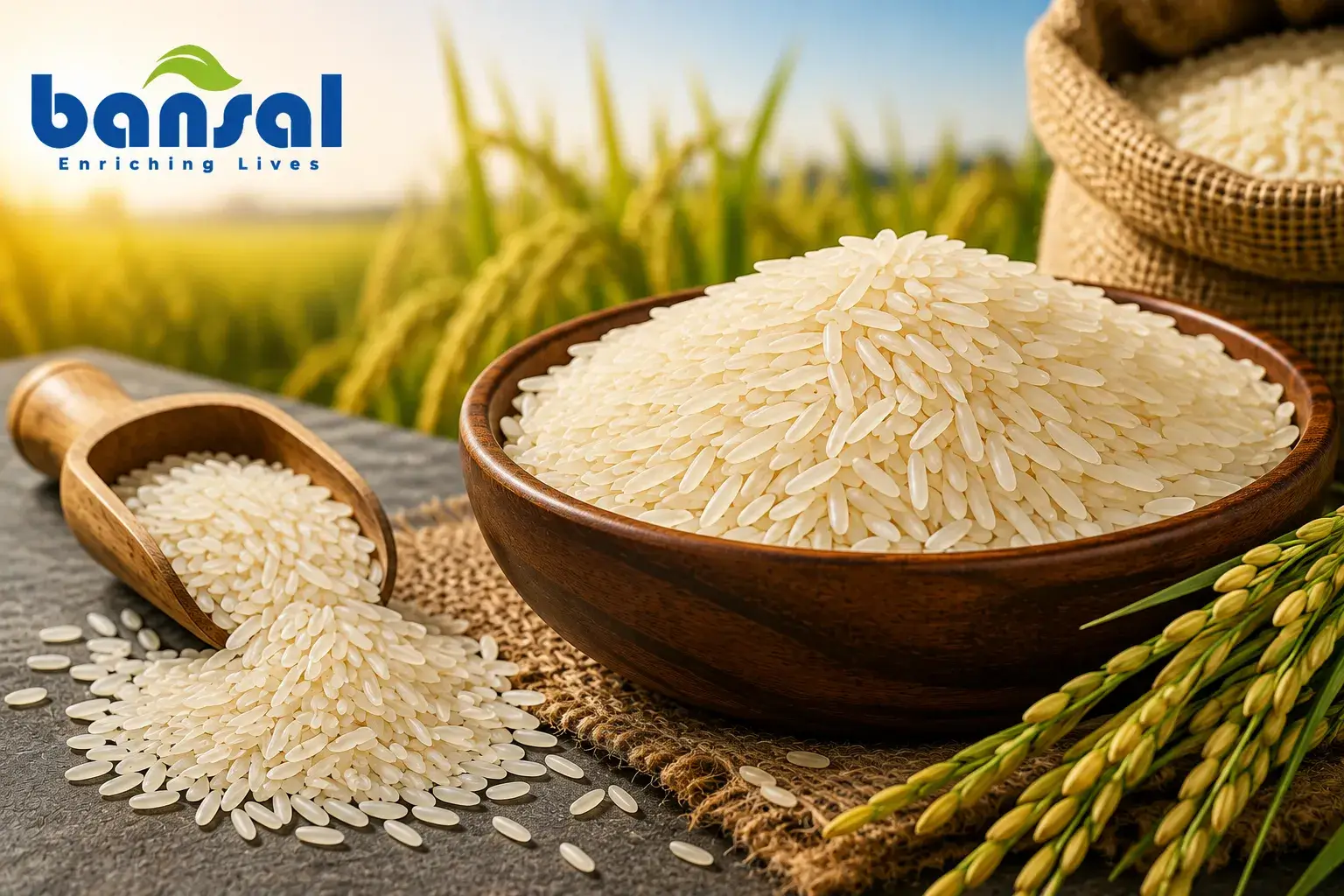
Most non-basmati rice varieties earn their place in the market through affordability and volume. RH10 takes a different path — it’s a hybrid variety bred specifically to deliver superfine grain quality and genuine aroma, positioning it closer to premium aromatic rice than most of the non-basmati category it technically belongs to.
RH10 is part of Bansal FineFoods’ non-basmati range, available through our non-basmati rice exporter and supplier portfolio alongside Sugandha, Sharbati, PR11, PR106, and IR64. Here’s what buyers should understand about it.
What Is RH10 Rice?
RH10 — formally developed as Pusa RH10 by the Indian Agricultural Research Institute — holds a notable distinction: it was the world’s first superfine-grain aromatic rice hybrid, released for commercial cultivation in the irrigated regions of Haryana, Delhi, and Uttarakhand in the early 2000s. As a hybrid, it was bred to combine the yield advantages of hybrid vigor with the grain fineness and fragrance that aromatic rice buyers specifically look for.
The result is a variety that yields significantly higher per acre than many traditional aromatic varieties, while still delivering the superfine, elongated grain structure and pronounced aroma that justify its premium positioning within the non-basmati category.
Key Characteristics of RH10 Rice
Grain quality — RH10 produces notably fine, slender grains, a direct result of its breeding objective to combine hybrid yield potential with premium grain fineness rarely achieved together in a single variety.
Aroma — a genuine, pronounced fragrance that holds up well through cooking, positioning RH10 closer to aromatic basmati-adjacent varieties than to standard bulk non-basmati rice.
Yield advantage — because it’s a hybrid variety, RH10 delivers meaningfully higher per-acre yields than many traditional aromatic rice types, which has helped keep supply relatively stable even as demand for aromatic rice has grown.
Texture — cooks into a balanced, non-sticky texture suitable for both everyday meals and more presentation-focused dishes, giving it flexibility across different buyer segments.
Positioning — RH10 sits at the premium end of the non-basmati category, often priced above staple varieties like IR64 or PR106 but below true basmati, making it a useful middle-tier option for buyers who want aromatic quality without full basmati pricing.
Why RH10 Appeals to Food Processors and Premium Retail Buyers
RH10’s combination of fine grain structure and genuine aroma makes it a natural fit for buyers who want to offer something more elevated than standard non-basmati rice, without stepping fully into basmati pricing territory. Food processors building premium ready-meal lines, retailers looking to differentiate a value-tier basmati alternative, and hospitality buyers wanting consistent aromatic quality at scale have all driven steady demand for RH10 in both domestic and export markets.
Its hybrid yield advantage also gives suppliers more pricing stability than some lower-yield aromatic varieties, which matters for buyers negotiating long-term supply contracts where price volatility is a real operational concern.
Common Uses for RH10 Rice
- Premium retail packaging — positioned as an aromatic, basmati-adjacent option at accessible pricing
- Food processing and ready-meal production — fine grain structure and reliable aroma suit packaged and semi-prepared rice products
- Hospitality and catering — consistent quality at scale for buyers who want aromatic rice without full basmati cost
- Export markets seeking aromatic value options — particularly relevant for diaspora-heavy markets where demand for fragrant rice exceeds basmati budgets
Cultivation and Breeding Background
RH10‘s development represented a genuine breakthrough in rice breeding at the time. Prior to its release, achieving both hybrid-level yield gains and the superfine grain, aromatic quality associated with premium rice was considered difficult to combine in a single variety — hybrids typically traded quality for yield. RH10 changed that equation, and its success helped pave the way for further breeding work in aromatic hybrid rice varieties across India’s agricultural research programs.
Cultivation remains concentrated in its original release regions of Haryana, Delhi, and Uttarakhand, areas with the irrigation infrastructure and growing conditions suited to the variety’s specific requirements. This regional concentration means supply, while stable, is somewhat more geographically limited than staple bulk varieties like IR64, which is grown much more widely across India.
Market Positioning and Buyer Perception
One detail worth understanding about RH10 is how differently it’s perceived depending on which segment of the market you’re talking to. To buyers deeply familiar with basmati grading, RH10 reads clearly as a non-basmati hybrid — distinct in origin and classification from true basmati varieties like 1121 or 1509. To general retail consumers, however, RH10’s fine grain and genuine aroma often register as “basmati-like,” which is precisely why it performs well in mid-tier retail positioning where the branding leans into aromatic quality without making unsupported basmati claims.
This dynamic makes RH10 particularly useful for buyers building house-brand aromatic rice lines who want a genuine quality story without competing directly against basmati price points — a positioning niche that’s proven commercially durable across both domestic Indian retail and export markets with strong aromatic rice demand.
Pricing Dynamics and Long-Term Value
Because RH10 sits in a middle tier between commodity non-basmati rice and premium basmati, its pricing tends to be less volatile than either end of that spectrum. Commodity varieties like IR64 are more exposed to global bulk-grain price swings, while premium basmati pricing can move sharply with weather-driven yield changes in specific growing regions. RH10’s hybrid yield stability, combined with its more geographically concentrated but well-established cultivation base, tends to produce steadier year-on-year pricing — a genuine advantage for buyers trying to plan margins on longer-term contracts or retail pricing strategies.
That said, buyers should still expect some seasonal variation, and locking in supply agreements ahead of peak demand periods — particularly around festival seasons when aromatic rice demand rises across Indian and South Asian markets — generally secures better terms than reactive, spot-market purchasing.
What to Check Before Sourcing RH10 Rice
- Grain fineness and length documentation — ask for lab-tested specifications rather than relying on visual samples alone.
- Aroma consistency across batches — hybrid varieties can show more aroma variation between harvests than traditional cultivars, so batch-specific verification matters.
- Moisture content and broken grain percentage — standard due diligence for any export-grade rice.
- Aging period — confirm how long the stock has been aged, since this affects both texture and aroma development.
- Sample cooking trial — request a sample before committing to bulk volumes, particularly if you’re positioning RH10 as a basmati alternative to existing customers.
Storage and Handling Recommendations
- Store below 25°C in a dry, low-humidity environment to preserve RH10‘s aroma and fine grain structure.
- Avoid prolonged exposure to heat or direct sunlight, which can diminish fragrance over extended storage.
- Use first-in, first-out stock rotation to ensure customers receive rice within its optimal freshness window.
- Reseal bulk packaging promptly after opening to protect against moisture pickup and pest exposure.
Why Buyers Choose Bansal FineFoods for RH10 Rice
We source and grade RH10 to documented specifications covering grain fineness, aroma consistency, and moisture content, giving buyers a dependable premium-tier option within our non-basmati range. Whether you’re building a basmati-alternative product line or supplying food service buyers who want aromatic quality at accessible pricing, our team can help structure orders and packaging formats to match your specific end use.
RH10 Compared to Other Non-Basmati Varieties
Against Sugandha and Sharbati, RH10 typically offers finer grain structure and stronger aroma, positioning it a tier above both in terms of premium quality. Compared to PR11 and PR106, RH10 leans firmly toward aromatic, presentation-focused applications rather than bulk institutional supply. Against IR64, the two serve very different priorities — IR64 competes on affordability and volume, while RH10 competes on grain fineness and fragrance.
A Practical Middle-Tier Choice for Growing Product Lines
For buyers mapping out a rice portfolio across price tiers, RH10 fills a genuinely useful gap — a variety that lets a brand offer a step up in aromatic quality from staple non-basmati rice without the full cost jump to premium basmati. That middle-tier positioning has proven durable across both domestic and export markets, and it’s worth considering seriously for any buyer whose current range feels like it’s missing a credible aromatic option between “basic” and “premium.”
Frequently Asked Questions
What makes RH10 rice different from other non-basmati varieties?
RH10 was bred as a hybrid specifically to combine high per-acre yield with superfine grain structure and genuine aroma, making it one of the more premium options within the non-basmati category rather than a standard bulk commodity rice.
Is RH10 rice a good alternative to basmati rice?
It can be, particularly for buyers who want aromatic, fine-grain rice at a price point below true basmati. It doesn’t fully match premium basmati varieties like 1121 in grain length or elongation, but it comes closer than most other non-basmati options.
Where is RH10 rice primarily cultivated?
RH10 is grown mainly in the irrigated regions of Haryana, Delhi, and Uttarakhand, areas well suited to its cultivation requirements as a hybrid aromatic variety.
Is RH10 rice suitable for bulk export?
Yes, its combination of yield stability and premium grain quality makes it suitable for both bulk export and premium retail or food service applications.
Does Bansal FineFoods offer sample lots of RH10 rice for testing?
Yes, we provide sample lots for cooking trials before bulk orders. Explore our full non-basmati range on our non-basmati rice exporter and supplier page.